Lawrenceville, GA · Garage Door Service
New garage door installation for Lawrenceville, GA homes built between 1951 and 2012, sized and insulated for this area's cold-moderate winters and aging openings.
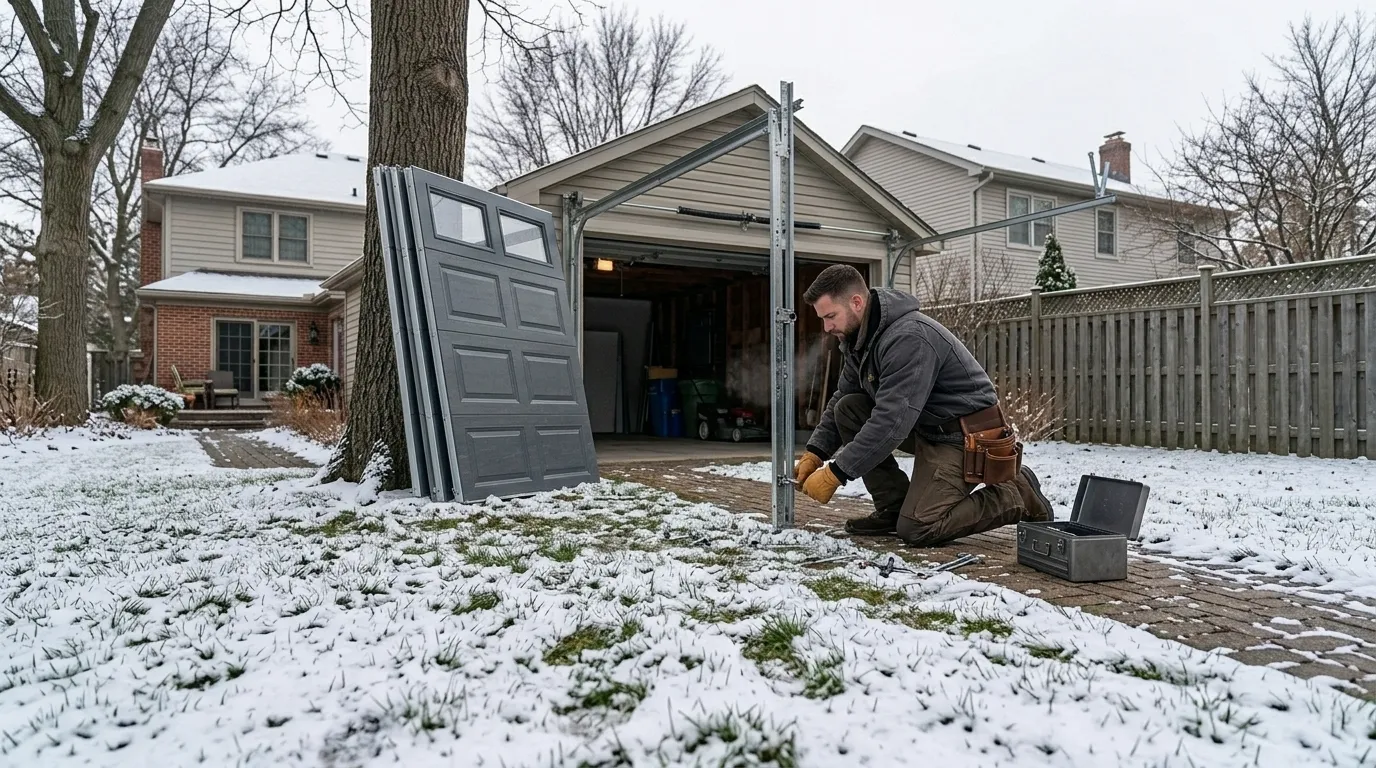
Lawrenceville's housing stock runs from 1951 through 2012, with most of it going up in the 1980s and 90s across the 25 named areas we cover. That spread means openings aren't standard the way they'd be in a single subdivision built in one year. We stock the section widths and track hardware that match both the older single-car openings from the earlier decades and the wider double-door bays that came standard once builders shifted to two-car garages in the 80s and 90s. We also keep insulated panel options on hand, since a door installed here needs to hold up to real winter cold snaps as well as summer heat, not just look good on day one. Torsion spring sizing varies with door weight and cycle count, so we carry a working range of shaft sizes and cable drums rather than one universal kit. What we don't keep on the truck is anything custom-cut for a nonstandard opening - if your garage was framed oddly or modified after the original build, that part gets ordered, and we'll tell you the lead time before you commit to a date.
Most calls for a new install, rather than a repair, come from doors original to houses built in that 1951-2012 window - especially the ones nearing the 1991 median age for this area. The door still closes, but the bottom panel has started to bow, the seal no longer sits flat against the slab, and cold air pushes through the gap on winter mornings. On steel doors from the 80s and 90s stock, you'll often see rust starting at the bottom corners where condensation collects, plus hinges that have stretched their screw holes from years of the door racking side to side. Homeowners usually notice it first as a draft in the garage, then as the opener straining harder on cold days because the door itself has gotten heavier from moisture in the panel core. None of that is a hardware failure you can spring-tune your way out of - it's the door itself reaching the end of what insulation and steel gauge it was built with.
Installation starts with measuring the actual opening, not assuming it matches a catalog standard - plenty of Lawrenceville garages built before the 90s have openings a few inches off from what's common now. We match track type to the framing already in the garage rather than forcing a retrofit that fights the structure. For the panel itself, we size insulation to the cold-moderate climate this area sits in, since a door that's fine in a mild climate can still let real cold through here in January. Springs get sized to the new door's actual weight and your household's daily cycle count, not just matched to the old broken one, because doors installed decades ago were often undersized to begin with. We also check the header and jamb condition before mounting anything, since a new door bolted to soft or shifted framing will fail early no matter how good the door is. The honest limitation: if your framing needs structural work beyond the door itself, that's outside what this install covers, and we'll say so upfront rather than bolt around it.
The core issue is age meeting climate. With housing here built mostly between 1951 and 2012 and a median build year of 1991, a big share of Lawrenceville garage doors are now three to four decades old - right at the point where steel gauge, insulation foam, and hardware all start failing together instead of one at a time. Add the cold-moderate climate band this area sits in, and you get repeated freeze-thaw cycling on hardware that wasn't built with today's insulation standards, plus panel cores that absorb moisture and add weight over the years. That combination is different from a warmer climate where an old door just gets sun-brittle, or a newer subdivision where nothing's old enough to fail yet. It's also different from a market with one dominant build era - the 25 named areas in this service territory span six decades of construction, so the fix that's right for a 1991-median-era door isn't the fix that's right for a house built in 1955 or one finished in 2012.
If the panel itself is bowed, rusted through at the bottom, or waterlogged from years of moisture in the core, repair won't hold. Springs, cables, and rollers are repairable on their own. A failing panel or a door that's racked out of square from age usually means replacement is the better use of your money.
An insulated panel sized for this area's cold-moderate winters will seal noticeably better than an original door built decades ago, especially at the bottom seal and between panel sections. It won't turn an unheated garage into a heated room, but it stops the draft that comes from a warped or gapped original door.
Most standard installs on a matched opening finish in a single visit. If your opening needs a custom-ordered part because the framing is nonstandard, we'll tell you that lead time before scheduling, since it's a separate order rather than something we stock.
Yes, we cover the surrounding service area including Grayson, Dacula, Sugar Hill, and the other communities within our territory. Distance and drive time factor into scheduling, so let us know your location when you call.
Call now or request a free quote - same-day service on most repairs, upfront written pricing.