Lawrenceville, GA · Garage Door Service
Lawrenceville homes built 1951-2012, median 1991, often carry single-layer steel garage doors from before insulation codes existed. Here's what that means for cold, cost, and repair.
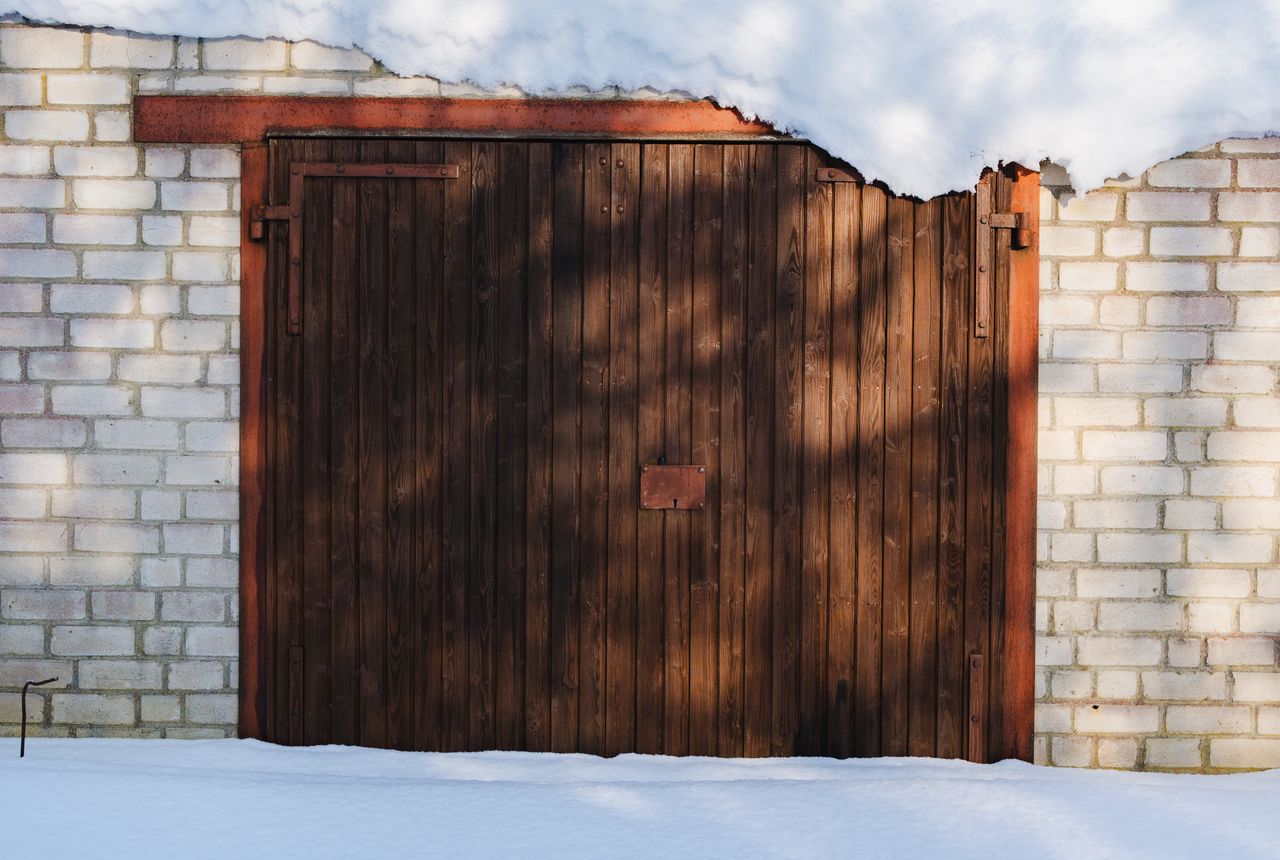
If your garage door is a flat steel slab with no visible foam or fiberglass backing, it's probably from the era before insulated doors were standard here. That's not automatically a problem. A single-layer door can still open and close fine for decades. Call someone when the panel is dented enough to flex, when the bottom seal has hardened and cracked so cold air pours in under it, or when you can hear the door itself rattle in the wind rather than the track. Those are signs the metal has fatigued, not just aged.
Also call if the garage feels noticeably colder than the rest of the house in winter and you've already sealed the door surround. On a lot of the older stock around Lawrenceville, that's the door itself, not a draft problem you can weatherstrip away. A tech can tell you in five minutes whether the fix is a bottom seal and some foam board on the back of the panels, or whether the door has reached the point where patching it costs more than it's worth.
One limitation worth saying plainly: we don't retrofit rigid foam insulation into every original panel design. Some of the oldest single-skin doors don't have the depth or the structure to hold an insulation kit properly, and forcing one in just adds weight the springs weren't sized for.
We're not going to quote a number here without seeing the door, because the range between a bottom-seal swap, a foam-board retrofit, and a full replacement is too wide to be honest about in the abstract. What we can tell you is what drives the decision on a Lawrenceville job specifically: the age and depth of the existing panel, whether the track and springs are original 1980s-90s hardware or have already been replaced once, and whether the opener predates the door.
On houses from the earlier end of the 1951-2012 build range, we sometimes find the door has been replaced already but the springs and track weren't sized for it and the door hangs wrong along the bottom rail - so the estimate ends up covering more than the customer expected. On houses closer to the median 1991 build year, the door is often still original, and the question is really whether an insulation retrofit makes sense or whether the steel itself is thin enough that replacement is the better dollar spent.
A fair estimate on this kind of job means someone stands in the garage and looks at the panel gauge, the track condition, and the seal, not a phone quote. That's the honest answer, even though it's less satisfying than a number.
Housing in the Lawrenceville service area was built between 1951 and 2012, with the median landing around 1991, and the stock is spread across 25 named pockets that mostly date to the 1980s and 90s. That matters for garage doors specifically because insulated doors weren't the default product on new construction until later than most of these houses went up. A house built near that 1991 median was very likely fitted with a single-layer steel door as standard, not an upgrade option.
With 88,407 households and 37,793 owner-occupied houses across the area, that's a large number of garages still running original or first-generation replacement doors. Median household income here is $79,073, which puts an insulated replacement door within reach for most owners, but plenty of houses still have the original door simply because it still closes and nobody's had a reason to look closely at it.
Neighboring towns a few miles out - Grayson, Dacula, Sugar Hill - sit in the same general build era and climate zone, so the same pattern of aging single-layer doors shows up there too. It's a regional housing-age issue as much as a Lawrenceville-specific one, but it's real here.
Lawrenceville sits in a cold-moderate climate band, which means winters bring real cold snaps but not the sustained deep freeze of harsher zones farther north. For an insulated door, that's a manageable swing. For an uninsulated single-layer steel door - which is what a lot of the 1980s-90s stock here still has - it means the garage itself tracks close to outdoor temperature all winter, and any pipes, freezers, or workspace equipment in there feel it.
The bigger mechanical issue is condensation and the freeze-thaw cycle on the hardware. A bare steel panel with nothing behind it cools fast at night and warms fast once the sun hits it, and that daily swing is what dries out weatherstripping, loosens hinge screws over the years, and eventually lets a bottom seal crack rather than just wear. On an insulated door the panel temperature stays steadier and the hardware doesn't go through that cycle as hard.
None of this means an uninsulated door needs to be replaced on a schedule. It means the symptoms - a stiff seal, a slightly warped bottom panel, a colder garage than expected - show up because of what the weather here does to that specific kind of door, not because something was installed wrong.
Open the door and look at the back of a panel. An insulated door has a layer of foam or fiberglass backing, sometimes covered by a thin metal or vinyl skin. If you see bare ribbed steel with nothing behind it, it's uninsulated. Most houses built near Lawrenceville's 1991 median build year came with the uninsulated version as standard.
Sometimes. If the panel is flat and structurally sound, a foam-board retrofit kit can work. If the door is dented, warped, or the steel gauge is very thin, adding insulation just adds weight to hardware that wasn't sized for it. A tech needs to look at the actual panel before that call gets made.
On a lot of the 1980s-90s stock in this area, the garage door itself is the reason - a bare steel panel with no insulation tracks close to outdoor temperature. In Lawrenceville's cold-moderate winters that shows up as a noticeably colder garage even after you've sealed the door surround.
Call now or request a free quote - same-day service on most repairs, upfront written pricing.