Lawrenceville, GA · Garage Door Service
Oakwood homes built mostly after 2001 run different opener and spring setups than older Lawrenceville-area stock. We travel from Lawrenceville to work on them.
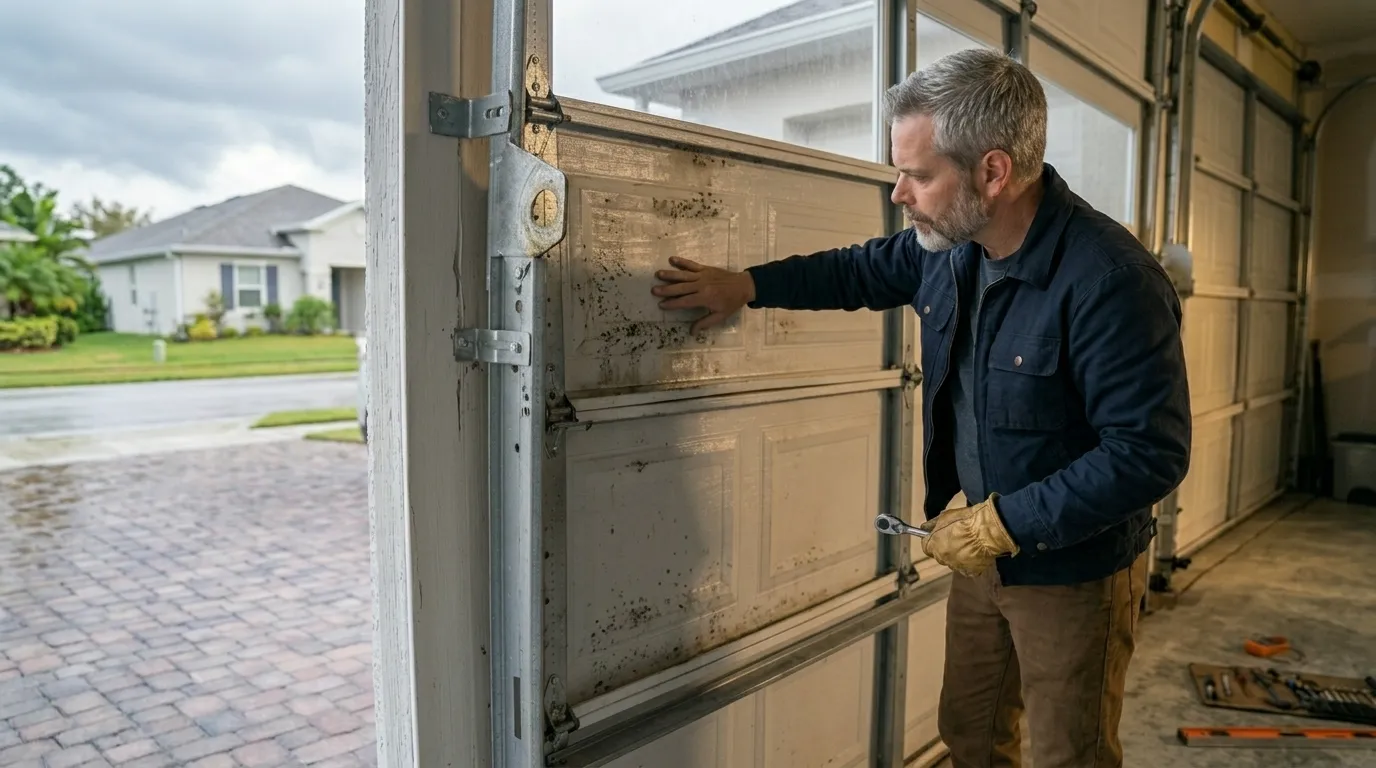
Oakwood sits about 20 miles out from our shop in Lawrenceville, and the calls we get from here skew different from the rest of the service area. With a median build year around 2001, most of the doors we're working on are newer than what we see closer in - steel sectional doors with factory-installed extension or torsion springs, and openers that are chain or belt drive from the early 2000s through today. That means fewer of the old one-piece doors and side-mounted hardware we deal with in the 1950s-60s pockets. Instead, the calls tend to be worn rollers, opener logic boards going bad, and torsion springs hitting the end of their cycle life after fifteen to twenty years of daily use. We still see the occasional off-track door after a car bump, and cable fraying is common once a spring starts failing and throws extra load on the drums. One honest limit: if a part is proprietary to a builder-grade opener from that era and the manufacturer no longer stocks the board, we may need to replace the unit rather than chase a repair. We'll tell you straight when that's the case instead of running up a bill on a dead end.
A door built to 2001-and-later code specs is a different animal than one built in the 1960s. Newer doors in Oakwood generally use 2-inch or thicker torsion springs rated for higher cycle counts, and openers wired to modern safety-reversal sensors - which means when something fails, it's more often electronic than mechanical. We're diagnosing sensor alignment, capacitor failure in the motor, or a stripped drive gear as often as a snapped spring. The climate here is cold-moderate, not the deep-freeze conditions that crack older, thinner steel panels, but winter mornings still stiffen up torsion springs and slow rollers that haven't seen grease in a few years. Given the area's median household income of $61,191, we find owners here are more likely to ask for a straight repair quote before signing off on full replacement, and with newer housing stock, that's usually the right call - the bones of the door are sound even when a part fails.
Oakwood has about 2,169 households, and most of the homes were built well after the broader service area's median of 1991 - the local median here lands around 2001, a full decade newer. That decade matters for garage doors: builders shifted to standardized torsion spring setups and safety-sensor-equipped openers as a matter of code, so the failure patterns here look more like modern wear-and-tear than the mismatched retrofits we find in older neighborhoods closer to Lawrenceville. It also means less guesswork on parts - hardware from a 2001-era build is still commonly stocked, where a 1950s door often means hunting down an obsolete spring size or an opener nobody makes bolts for anymore.
Across the wider service area, housing spans 1951 to 2012, with the median falling at 1991 - a 40-year spread that means our trucks go from repairing original one-piece doors on side-mounted hardware to servicing openers barely a decade old, sometimes in the same afternoon. Oakwood sits on the newer end of that range, a full ten years past the area median. That shifts the job mix: fewer full hardware overhauls, more targeted fixes - a bad capacitor, a misaligned sensor, a spring nearing its rated cycle count. It's worth knowing which side of that split your house falls on before you call, because it changes what a fair repair estimate looks like and whether replacement parts are sitting on a shelf or need to be sourced.
No, we run out of Lawrenceville and travel to Oakwood, about 20 miles away. We don't keep a local depot here, but we do take calls from this area regularly.
Generally yes. Oakwood's median build year is around 2001, a decade newer than the broader service area's 1991 median, so you're more likely to have a factory torsion spring setup and a safety-sensor-equipped opener than an older one-piece door.
Usually. Parts for that era are still commonly available, and the door itself is typically in good shape. The exception is if the opener's control board is a discontinued proprietary model - then replacement can be the more sensible option.
The area sits in a cold-moderate climate band, so we don't see the panel cracking that comes with harsher freezes, but winter mornings can stiffen torsion springs and slow rollers that need lubrication.
Call now or request a free quote - same-day service on most repairs, upfront written pricing.