Lawrenceville, GA · Garage Door Service
Garage door repair and replacement for North Decatur homes, most built in the 1970s. We travel from Lawrenceville, 20 miles out, to fix what that era's hardware actually breaks.
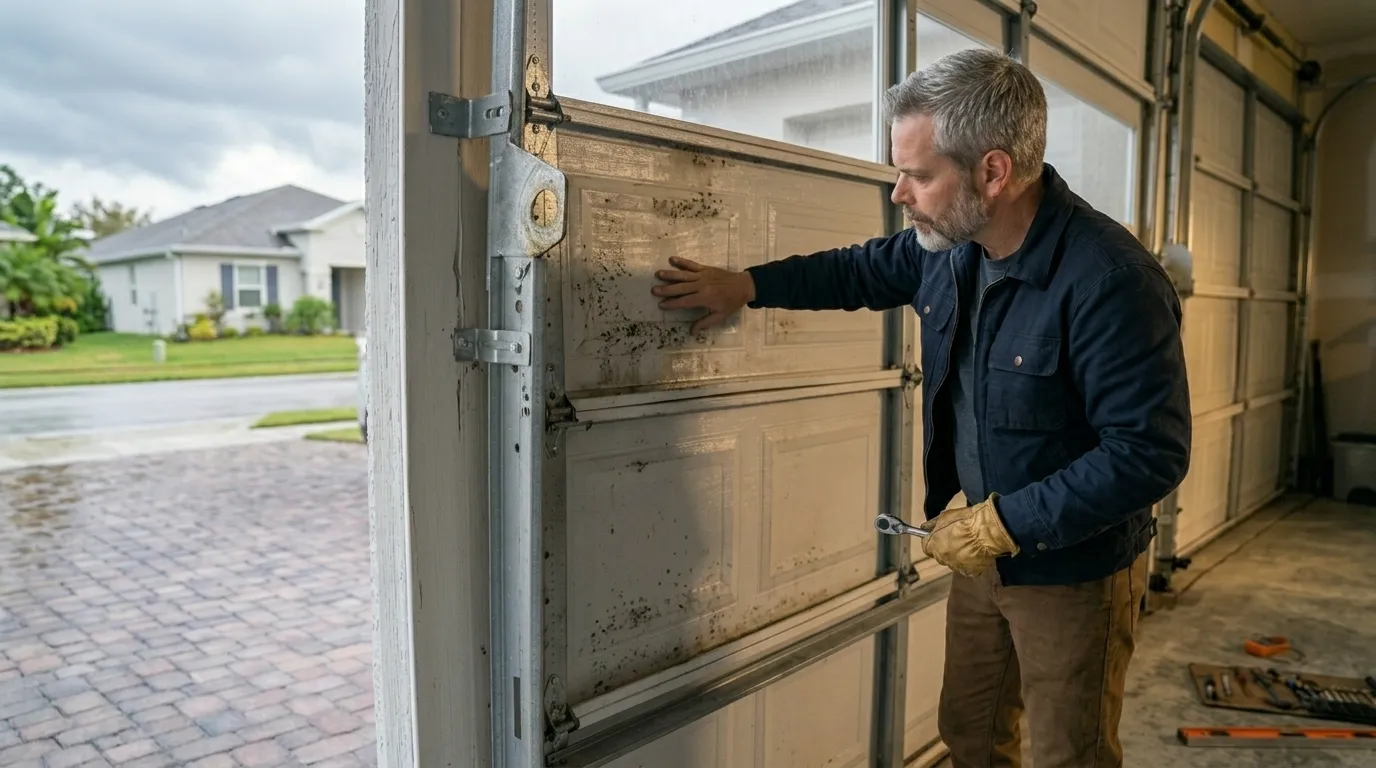
North Decatur sits about 20 miles from our Lawrenceville shop, and the calls we get from this side of the coverage area look different from the ones closer in. The median home here went up around 1974, a good seventeen years earlier than the median across the wider service area. That gap matters more than it sounds like on paper. A house built in the early-to-mid 1970s usually still has its second or third garage door opener by now, but the actual door track and jamb hardware is often original or close to it. We see extension springs mounted without containment cables, single-thickness steel doors with no insulation, and center-mounted openers bolted to framing that's shifted a little over fifty years. None of that is unusual for a house this age, but it does mean the fix is rarely just swap-the-part. We're often working around a track alignment issue or a header that's not square before we ever get to the spring or opener itself.
With a build era this far back, the most common failure we see is an extension spring giving out on a door with no safety cable run through it, which is exactly the setup a lot of 1970s garages still have. Second most common: openers on a chain drive that's outlived two or three motors and finally taken the rail with it. Panel doors from this vintage were often steel over a wood frame, and after decades of Georgia's freeze-thaw cycles, the wood core can swell, split, or rot at the bottom panel even if the steel skin looks fine. We're honest about it when that's what we find, because painting over rust on a door that's structurally done is a waste of a homeowner's money. Replacement steel doors built to current wind and insulation specs are a better use of the budget in that case than another round of patch repairs on the original panel.
North Decatur has around 8,142 households, a small slice of the roughly 88,407 across our full coverage area, and the median household income here runs about $110,366, well above the $79,073 median for the service area as a whole. That income level shows up in the calls: more requests for full opener upgrades with battery backup and rolling-code security, more interest in insulated doors rather than the cheapest steel option on the shelf. We don't treat that as a reason to upsell everyone, but it does mean when a homeowner asks about a quieter belt-drive opener instead of patching a forty-year-old chain drive, the budget conversation is usually short. Climate here falls in the cold-moderate band for the region, which is mild enough that insulation is a comfort call more than a structural necessity, but it still factors into which door holds up best against the yearly freeze-thaw swings.
Across the wider service area, housing spans 1951 to 2012 with a median around 1991 and a mix of twenty-five named communities, mostly 1980s and 90s builds. North Decatur breaks from that pattern by a wide margin, sitting nearly two decades earlier at a median of 1974. That puts it closer in age to older pockets near Stone Mountain or Clarkston than to the newer construction further out toward Braselton or Hoschton. What that means on a service call: we bring different hardware assumptions here than we do on a 1995-built house in one of the newer subdivisions. One honest limitation - if a door here needs a wood-core panel replacement matched to an original 1970s frame, that part often isn't something we carry on the truck, and it can mean a return visit once it's ordered. We'd rather tell you that up front than promise a same-day fix we can't back up.
No. We run out of Lawrenceville, about 20 miles away, and travel out to North Decatur for repair and replacement calls. We don't keep a local depot here, so scheduling is built around the drive.
The house itself may not be old, but if it was built around 1974 like the North Decatur median, you're likely on your second or third opener already. The track and header hardware behind it, though, is often original, and that's usually the real source of repeat failures.
Often yes. Steel doors from that era were built over wood-frame cores, and after decades of freeze-thaw cycles the wood can rot or split even when the steel face looks okay. A repair on a structurally failing panel rarely holds long, so replacement is usually the better spend.
Not always. Wood-core panel replacements matched to a 1970s frame sometimes need to be special-ordered, which can mean a second visit rather than a same-day fix. We'll tell you upfront if that's the case rather than guess.
Call now or request a free quote - same-day service on most repairs, upfront written pricing.