Lawrenceville, GA · Garage Door Service
Serving Dacula from Lawrenceville, 6 miles away. Homes here mostly went up after 2001, so the springs, openers and tracks we replace skew newer than the rest of the service area.
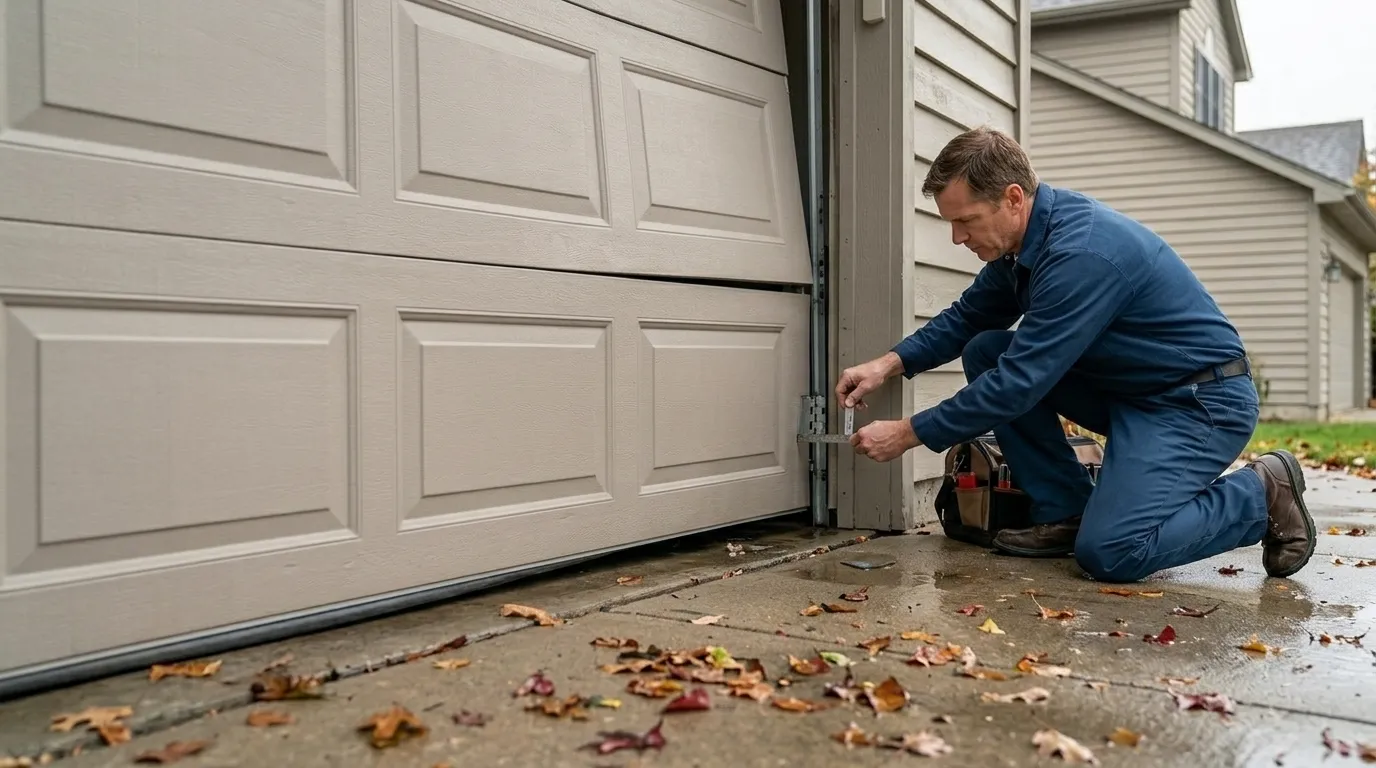
We drive out to Dacula from our Lawrenceville shop, about 6 miles down the road, for the same reasons we go anywhere else in the area: a spring that let go on a cold morning, an opener that grinds instead of lifts, a track that's walked out of alignment. What's different here is the age of what we're working on. Dacula's median year built is 2001, a full decade newer than the 1991 median across the wider service area, so the calls skew toward newer hardware with different failure points than what we see in older pockets. We're not troubleshooting forty-year-old extension springs on these jobs as often - we're dealing with torsion systems and mid-2000s opener boards that are just now hitting the age where belts stretch and circuit boards start acting up. That shifts what we bring on the truck and what we check first when we walk up to a door.
A door installed in 2001 or later is almost always on torsion springs mounted on a header bar above the opening, not the older side-mounted setups you'd find on a 1970s house. That's good news for repair - torsion hardware is more standardized and parts are easier to source - but it means the failure isn't usually a mystery original part. It's wear: cables fraying at the drum, rollers going oval, the torsion spring finally hitting the end of its cycle count after 15-20 years of daily use. With 2,223 households in Dacula, most falling in that same build era, we see the same handful of issues repeat across the neighborhood - it's less about one-off oddities and more about components aging out on a predictable timeline. One honest limit: if a spring has already snapped and taken a cable with it, we're not going to just swap the spring and call it fixed - we check the whole system before it goes back into daily use, and that sometimes adds a return trip if a part isn't on the truck.
Dacula sits in a service area where housing stock runs from 1951 up through 2012, with the wider region's median landing at 1991 and most of it concentrated in 1980s and 90s construction across the 25 communities we cover. Dacula itself skews newer than that regional median - 2001 - which puts a good share of its homes built after the more energy-conscious codes of the early 2000s took hold. The area sits in a cold-moderate climate band, which matters less for the door skin and more for the opener and weatherseal: freeze-thaw cycles work on rubber seals and metal fasteners over time, regardless of when the house went up. Median household income here runs $74,900, close to but a bit under the $79,073 median for the broader service area, which tends to track with steady replacement-and-repair work rather than large-scale upgrade jobs.
Across the full service area, the housing stock ranges from 1951 through 2012, and that 60-year spread is exactly why hardware varies so much house to house depending on which part of the region you're in. Dacula falls on the newer end of that range at a 2001 median, closer in age to newer construction than to the older side-mounted, extension-spring homes found elsewhere in the coverage area. That doesn't mean every house here is uniform - a street built in the late 90s sits next to one finished in the mid-2000s, and we still find the occasional older door on a lot that got built out later than its neighbors. But as a rule, when we get a call from Dacula, we come in expecting torsion hardware, steel-and-composite panel doors, and openers with circuit boards rather than pure mechanical relays. That's a different toolkit than a call from one of the older pockets of the service area, and it's why we ask a few questions about the door before we ever load the truck.
No, we run out of our Lawrenceville shop, about 6 miles from Dacula, and drive out for every job. We don't have a separate depot or crew stationed here.
Generally yes. Dacula's median year built is 2001, compared to a 1991 median across the wider service area, so torsion-spring systems and newer opener boards are more common here than older side-mounted hardware.
Given the building era, we mostly see torsion spring wear, opener boards nearing the end of their life, and roller or cable wear from years of daily cycling - less often the older mechanical failures you'd find on pre-1990s doors.
It affects seals, fasteners and lubrication more than the door panel itself. Freeze-thaw cycles over a winter can stiffen weatherstripping and dry out chain or belt lubrication regardless of how new the door is.
Call now or request a free quote - same-day service on most repairs, upfront written pricing.