Lawrenceville, GA · Garage Door Service
Serving Cumming's mostly 1990s-and-later homes, 19 miles from our Lawrenceville shop. Torsion spring, opener, and panel work suited to newer builder-grade doors.
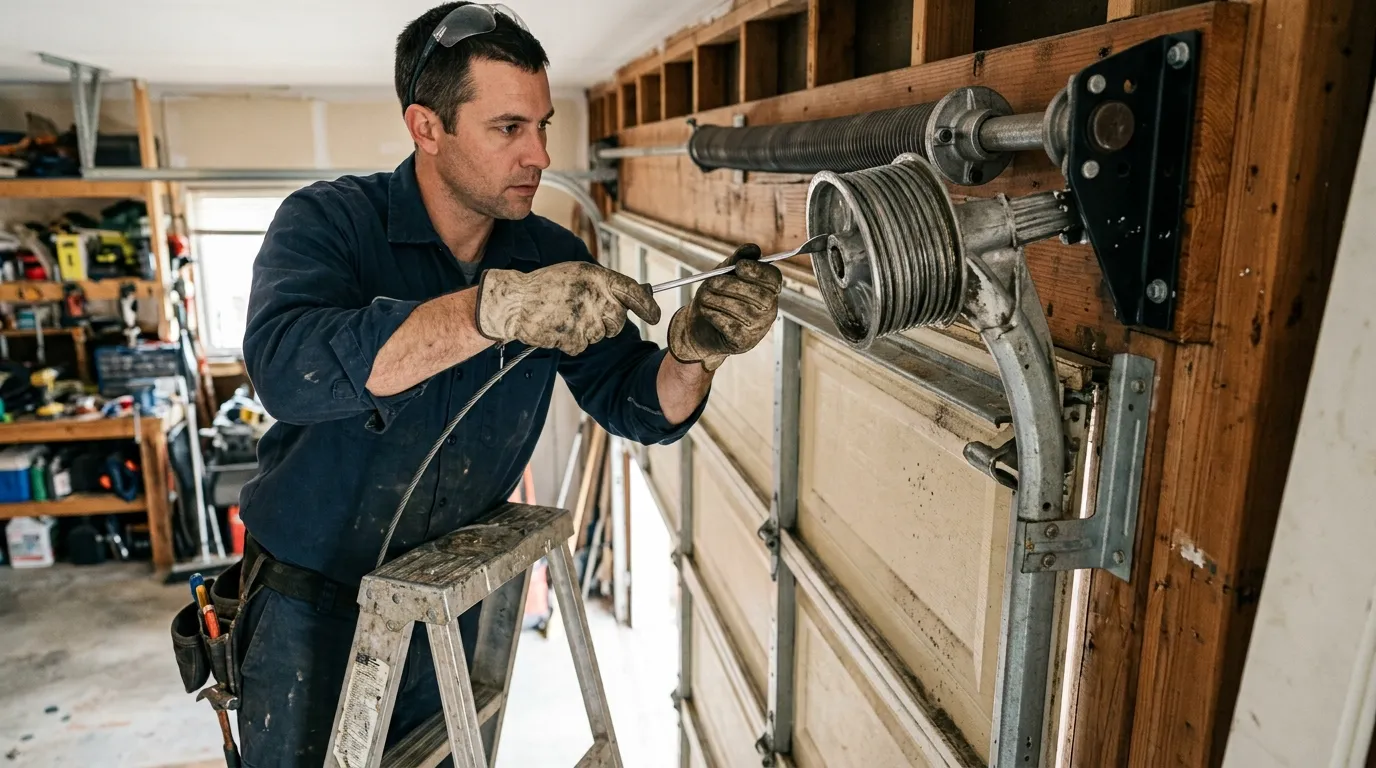
Cumming sits about 19 miles out from our Lawrenceville shop, and the calls we get from this side of the coverage area look different from what we see closer in. The typical house here went up around 1998, which puts most doors well inside the era of factory-installed torsion systems and photo-eye safety sensors rather than the older extension-spring setups you find on pre-1980s garages. That means fewer emergency spring failures from corroded, undersized hardware and more calls about openers reaching the end of their circuit board life, worn nylon rollers on steel raised-panel doors, and torsion springs that have simply cycled out after two-plus decades of daily use. We also get a fair number of calls about misaligned tracks on double-wide doors, which is common on the wider bays builders favored in this stretch of newer subdivisions. It's routine work, but it's a different mix of routine work than what an older neighborhood generates.
A door built in 1998 is not the same repair job as a door built in 1965, even though both might be jammed shut on a Tuesday morning. Builder-grade doors from this period in Cumming are almost always steel, almost always torsion-spring, and almost always paired with a chain or belt-drive opener that's now old enough to need a logic board or drive gear rather than a full replacement. We see torsion springs rated for a 10,000-cycle life reaching the end of that count right around now, which is exactly what you'd expect from hardware installed in the late '90s. The panels themselves usually outlast the springs and openers by a wide margin, so a lot of these jobs are hardware swaps on doors that are otherwise sound. Where we run into limits: if the opener is an older chain-drive unit with a logic board that's no longer made, we'll tell you straight that a new opener is the better spend than chasing parts for one that's obsolete.
Cumming carries roughly 2,614 households, smaller than the county-wide count of 88,407 households and 37,793 owner-occupied houses that spans the broader Lawrenceville Garage Door Pros service area. Median household income here runs $79,073, matching the service-area median, which tends to track with the volume of mid-range steel doors and standard-lift openers rather than higher-end insulated or custom wood units. The climate band across the coverage area is cold-moderate, which affects hardware here the same way it does everywhere else we run trucks - winter temperature swings stiffen torsion springs and can make a marginal spring snap on the first cold morning it's really tested, rather than gradually failing over months.
Across the wider service area, housing spans 1951 to 2012 with a median build year of 1991 - a 60-year range that means a single street can have three completely different generations of garage door hardware. Cumming sits on the newer side of that spread, with a median build year of 1998, seven years past the area-wide median. That gap matters more than it sounds. Neighborhoods built in the 1950s and '60s still turning up on the older end of that range often carry side-mounted torsion hardware or original extension springs nobody stocks anymore, while a 1998-era Cumming garage is running mainstream torsion springs and openers that any tech carries parts for on the truck. It's a more straightforward repair market, generally, though openers from this exact era are now old enough that a logic board replacement can cost close to what a new opener runs - worth weighing before you sink money into an eighteen-year-old unit.
No. We run out of Lawrenceville and travel to Cumming and the rest of the coverage area. We don't claim a local depot or a guaranteed response window here - we're straightforward about being a traveling crew for this part of the map.
Openers installed when most Cumming homes were built, around 1998, are now old enough that logic boards, gear sets, and drive belts wear out on their own timeline, separate from the door itself. It's normal end-of-life failure, not a sign anything was installed wrong.
If your house dates to the late 1990s like most of the area, it's plausible - torsion springs are commonly rated around 10,000 cycles, and a spring installed in 1998 running two to four cycles a day would be due or overdue for replacement by now.
If the logic board or a discontinued part is the problem, replacement is often the better spend than chasing parts for a unit from the late '90s. We'll tell you honestly which side of that line your job falls on before we start any work.
Call now or request a free quote - same-day service on most repairs, upfront written pricing.