Lawrenceville, GA · Garage Door Service
Garage door jumped its track in Lawrenceville? We stock rollers, track sections, and cable hardware sized for the area's 1980s-90s door stock and fix it same visit.
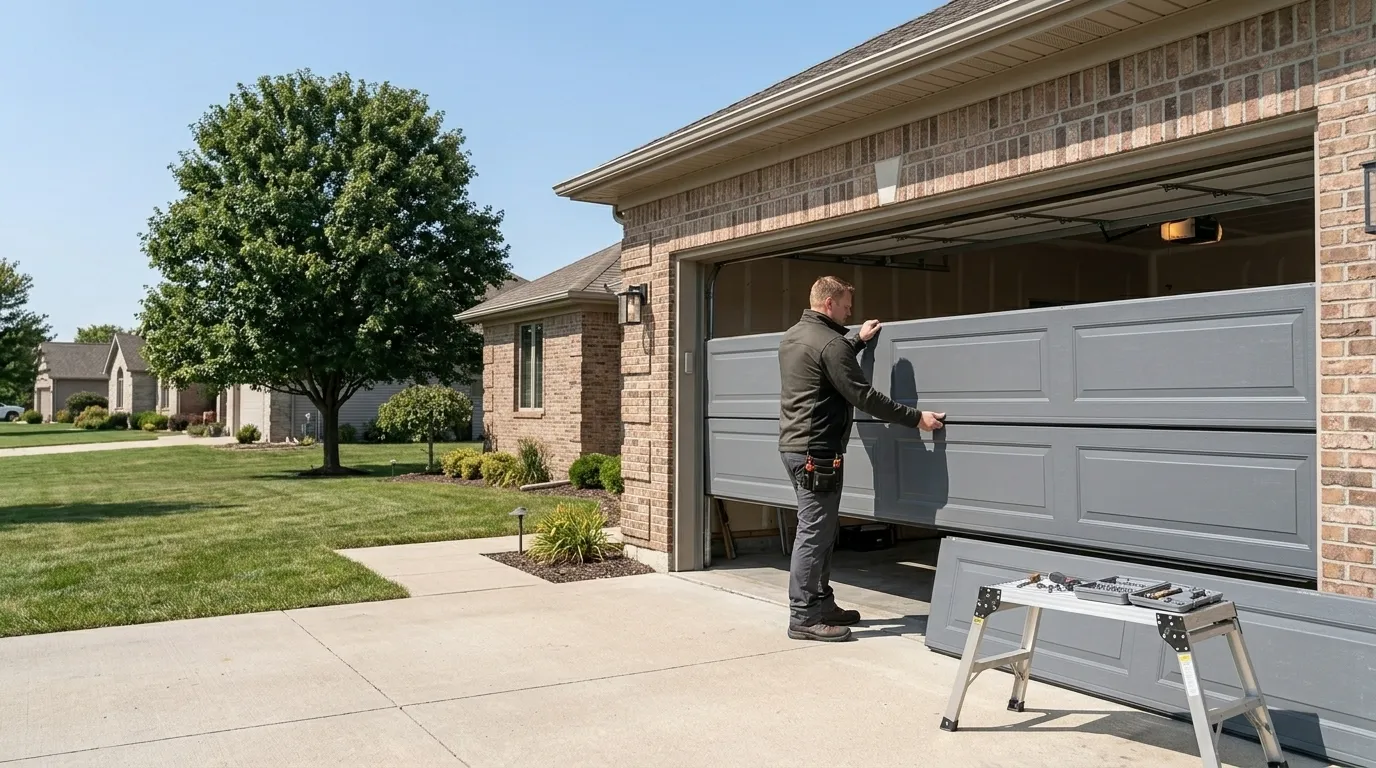
We carry the parts that actually fail on a door that's jumped its track, not a generic assortment. That means galvanized track sections in the standard widths used on the doors built across this service area from the early 1990s through the 2000s, nylon and steel rollers in both 7-inch and 10-inch stems, roller brackets, and the flag brackets that anchor the bottom section to the track. We also keep lift cables and the drums they wind onto, since a snapped cable is the most common reason a door comes off track in the first place, not a bent rail. Torsion springs get stocked in the sizes that match single and double doors on the older side-mount setups still common on houses from the 1950s through 1970s that sit scattered through the 25 areas we cover. What we don't stock is every obscure OEM bracket from a door manufacturer that stopped making that exact hardware years ago. If your door is one of those, we tell you on-site rather than pretending we have it on the truck, and we order it instead of forcing a part that won't seat right. That honesty costs us a callback sometimes. It saves you a door that comes off track again in six weeks.
Most calls sound the same: the door stopped halfway, or it's hanging crooked with one corner low and a visible gap where the roller left the rail. Sometimes it's a scraping or grinding noise for a few days before it finally jumps clean off. On the older housing stock in this area, built mostly through the 1980s and 90s with plenty of stock going back to 1951, the tracks were installed to a spec that assumed light seasonal movement, not decades of freeze-thaw cycling on the mounting brackets. A cold moderate climate here means the slab and the door frame expand and contract enough, winter to summer, that bracket bolts work loose over the years. Add a bent track from a car bumper tap or a kid's basketball, and the roller has nowhere to ride but out. You'll also see it on doors with worn rollers that have gone oval instead of round - they don't track straight anymore, and eventually they walk right off the rail edge under normal opening tension.
First we check whether the track itself is bent or just knocked out of alignment, because those are two different repairs. A track that's simply loose gets re-set to the jamb and re-bolted; a track that's actually bent gets replaced in that section rather than hammered straight, since a straightened rail almost always kinks again within months. We reseat the door on the rollers, check every roller bracket for cracked welds or stripped screws, and run the door through a full cycle by hand before we ever touch the opener, because a door that binds on the track will strip opener gears if you power through it. If the cable jumped the drum, we rewind it under tension rather than just looping it back on, and we check the opposite side cable too, since a door usually comes off track evenly loaded until one side gives out. Springs get checked for correct wind at the same visit, since a door running low or heavy on one spring puts uneven pull on the rollers and sets the whole failure up again. We test the full travel three times before we call it done.
This isn't a fault that shows up the same everywhere. Housing across this service area runs from 1951-built stock up through 2012 construction, with the bulk of it - across the 25 named areas we serve - dating to the 1980s and 90s. That's a specific window: doors and track hardware from that era used lighter-gauge steel and roller brackets than what's sold today, and thirty-plus years of a cold moderate climate cycling the slab and frame has worked those original fasteners loose house by house. A door built in 2010 on a newer street handles that cycling fine for now. A door original to a house from the 80s is due, whether or not it's shown symptoms yet. With 37,793 owner-occupied houses sitting across roughly 88,000 households in this area, that's a large share of doors approaching the same bracket-fatigue point around the same time, which is why this call comes in steadily rather than as a rare emergency.
You can try, but if a cable is loose or a spring is under tension while the door sits off track, forcing it back can snap something worse and hurt you. If the door moved even slightly and you're not sure why, leave the opener unplugged and call before touching it.
No. Most of the time it's a bent track section, worn rollers, or a loose bracket, all repairable without touching the door panels themselves. Replacement makes sense when the door itself is warped or the track damage is tied to a bigger structural hit, but that's the exception, not the rule.
Houses built from the 1950s through the 1980s used lighter track hardware than what's standard now, and decades of seasonal temperature swings have worked the mounting bolts loose. Newer builds from the 2000s on tend to hold up longer before showing the same wear.
By Neighborhood
We also handle off track repair in these Lawrenceville-area suburbs.
Call now or request a free quote - same-day service on most repairs, upfront written pricing.