Lawrenceville, GA · Garage Door Service
Opener installs and swaps for Lawrenceville homes built mostly in the 1980s and 90s, matched to the cold-moderate climate and the gear-driven openers that came standard back then.
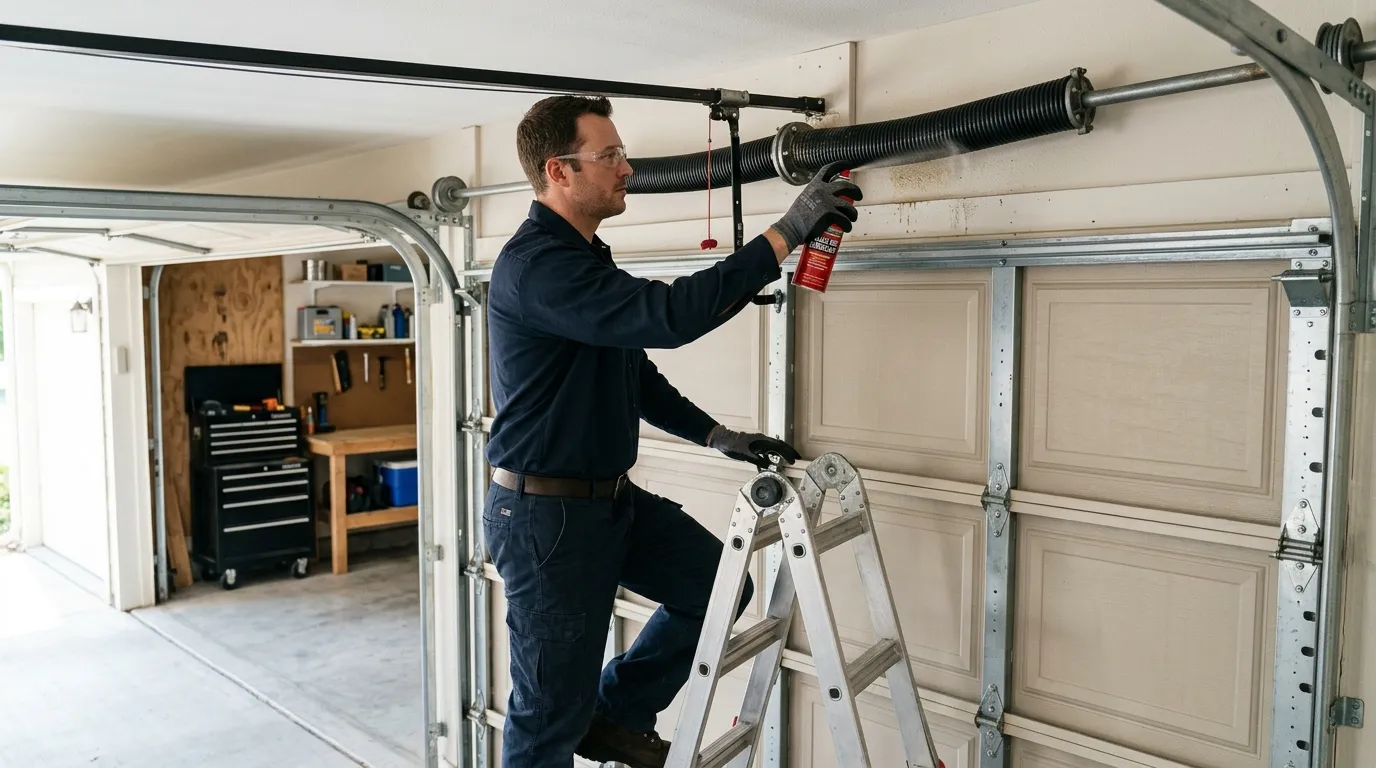
We keep openers and the parts that go with them for the housing stock that actually sits in this service area. Homes here were built between 1951 and 2012, with the median landing around 1991, and most of the 25 named communities we cover lean toward 1980s and 90s construction. That means a lot of chain-drive and screw-drive units from that era are still on the ceiling, running original logic boards or a mid-2000s replacement that's now failing the same way the first one did. We stock 1/2 HP and 3/4 HP chain-drive openers, belt-drive units for owners who want quieter operation, standard safety sensor pairs, drive gears, and the wall controls that match older bracket mounts. What we don't carry on the truck is every discontinued board for openers pulled before 2000 - if your unit is that old, we'll usually recommend a full swap over hunting a part that hasn't been made in years.We size the unit to the door, not the other way around, since a lot of doors in this area are heavier insulated replacements sitting on hardware built for the lighter original panel.
In a household with an opener from the 1980s or 90s stock, the first sign is usually the gear kit going before anything electrical does - a grinding sound followed by the door stalling halfway. In colder months here, grease in the drive rail thickens and the chain drags, so the same opener that ran fine in October starts groaning by January. Owners also see the safety sensors drift out of alignment as the door track settles with the house, which is common once a slab has had a few decades to move. Because median income in this service area sits around $79,073, a good number of these households replace the opener once rather than patch it twice - a wall control that no longer syncs to the remote, or a motor that runs but won't lift, are both signs the unit's at the end of its run, not a fuse away from fine.
We start by testing the existing opener under load rather than guessing from the sound alone - chain slap, motor hum without lift, and a sensor light that blinks but won't clear each point to a different fix. If the logic board or capacitor has gone bad on a unit under ten years old, we'll replace that part rather than the whole opener. Past that age, or if the gear kit and board are failing together, we install a new unit sized to the door's weight and cycle count, remount the sensor brackets square to the slab, and reset the travel limits so the door doesn't slam or reverse early. For homes on the older end of the 1951-2012 range, we also check whether the header bracket and track can take a modern opener's mount points without reinforcement, since some of the original framing wasn't built for it. We test through several full cycles before we call it done, not just one open-close.
This is a cold-moderate climate, not a mild one, and that matters for opener life more than most owners expect. Grease and gear lubricant that's fine at 55 degrees stiffens up when nights drop into the 20s and 30s, and an opener already carrying 20-30 years of use doesn't have the reserve torque to push through it - that's why so many calls here cluster once the weather turns. Add in that the bulk of this service area's 37,793 owner-occupied houses were built during that 1980s-90s run, and you get a large concentration of openers hitting end-of-life at roughly the same time, across towns from Grayson and Dacula out to Sugar Hill and Auburn. It's not a coincidence and it's not bad luck - it's the housing stock and the winters doing exactly what they do to a 30-year-old motor and gear set.
If the gear kit, logic board, and motor bearings are all showing wear together, which is common on openers from the 1980s-90s housing stock here, we usually recommend replacement. A single failed part on a unit under ten years old is worth repairing instead.
This area sits in a cold-moderate climate band, and the drive lubricant in an aging chain or screw-drive opener thickens once nights get cold. An opener with worn gears already has less torque to spare, so the cold is what finally makes the strain obvious.
Often yes, but homes built earlier in the 1951-2012 range sometimes have header brackets that weren't sized for a modern opener's mount points. We check that during the visit and reinforce it if needed rather than forcing a mismatch.
We carry parts for the openers common to this area's 1980s-90s housing stock. For units installed before 2000, boards are often discontinued, and a full opener swap is usually faster and more reliable than sourcing an obsolete part.
By Neighborhood
We also handle opener installation in these Lawrenceville-area suburbs.
Call now or request a free quote - same-day service on most repairs, upfront written pricing.