Lawrenceville, GA · Garage Door Service
Mountain Park homes date to a median year of 1979, older than most of the service area. See what that means for a new garage door install and what we stock for the job.
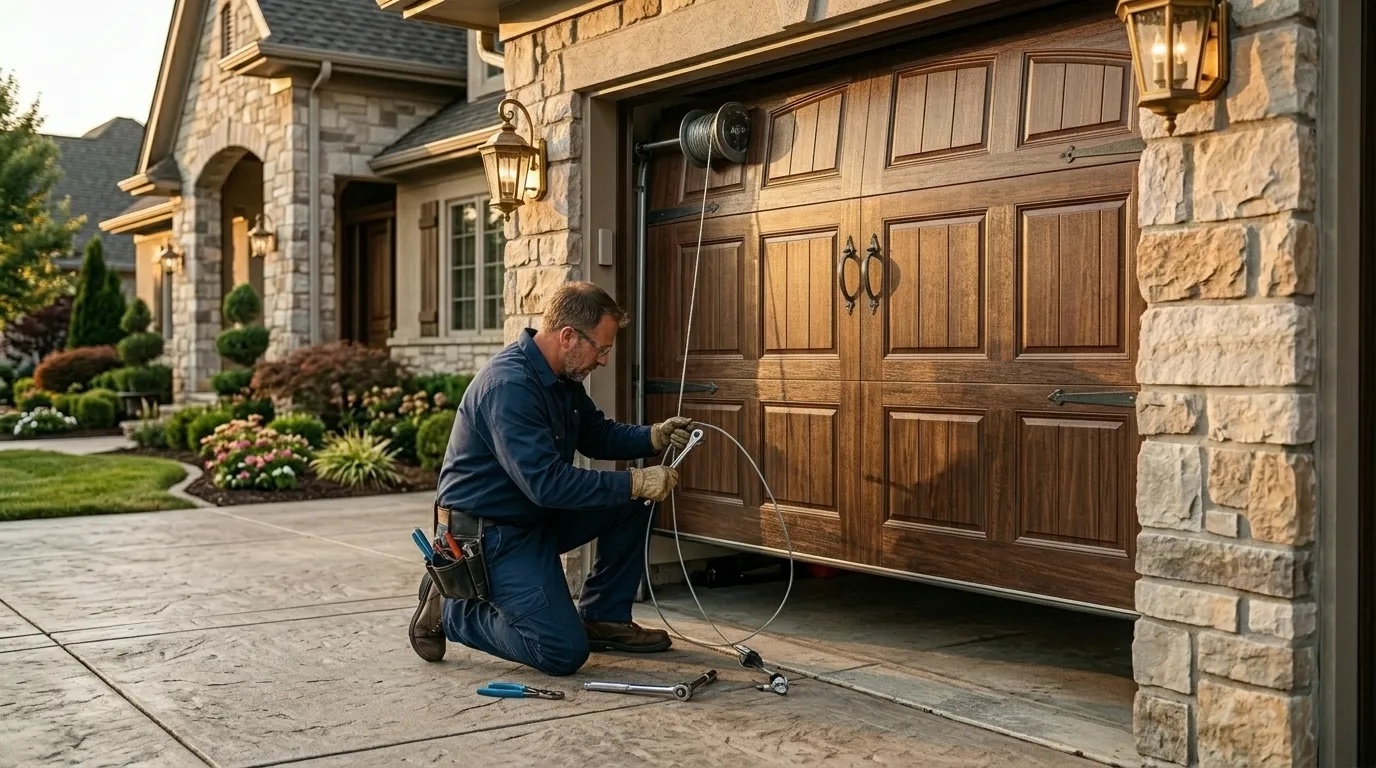
Mountain Park's houses have a median build year of 1979, older than the 1991 median across the wider Lawrenceville service area. That gap matters. A door and track system installed in the late 1970s has usually gone 40-plus years without a full replacement, which means the track, the hinges, and often the header bracket are original equipment. Steel from that era wasn't galvanized the way current stock is, and it wasn't sized for the heavier insulated panels most owners want today. When we get a call from this pocket of the service area, we're not usually looking at a door that failed last week. We're looking at a door that's been marginal for a decade and finally quit. The original opener bracket, if it's still there, was rated for a door half the weight of what's going in now. That's not a Mountain Park quirk exactly, but it's the direct result of when these houses went up, and it's why a straight swap - old door, same track, new panel - is often the wrong call here.
On a house from this era, the tells are consistent. The track brackets have been re-drilled once or twice already, meaning the wood behind them is chewed up and won't hold a new lag screw the way it should. The bottom bracket cable drum shows wear grooves that don't match any cable currently for sale, because the drum diameter changed industry-wide sometime after this house was framed. Owners usually notice the door is heavier to lift by hand than it used to be, or that the opener strains and reverses partway up. That's the spring losing tension over decades of cycling, not a sudden break, though a sudden break is where it ends up. None of this is dramatic until the day the spring lets go, and by then the track and hardware around it are due anyway.
For jobs in this age bracket we carry the wider stud-pattern brackets that fit older jamb framing, plus the heavier torsion springs sized for insulated steel doors rather than the lighter single-layer panels these houses were built with. We keep standard track sections and rollers on the truck because most of what comes off a 1970s-era door doesn't match anything a home center sells today - the drum size and cable gauge both changed since. One honest limit: if the opening itself is out of square, which happens after decades of settling, that's a carpentry fix before the door goes in, and it can add a day to the job. We don't pretend that away.
With a median household income of $95,678 and roughly 4,667 households in this area, most jobs here are full replacements rather than patch repairs, since the age of the hardware makes partial fixes short-lived. We price the job on what's actually on the wall - track condition, header framing, opener age - not on a flat number, because a house built in 1979 and a house built in 1998 need different hardware even if the door looks the same from the driveway.
The biggest complication on older Mountain Park homes is the header above the opening. Framing from this era was often sized for a lighter single-panel door, and a modern insulated double door weighs more. We check the header before we quote the spring size, because guessing wrong means a door that sags in the middle within a year. Wiring for openers is another one - houses from 1979 rarely had a dedicated circuit run to the garage, so we sometimes have to route around what's there instead of assuming a plug exists where it should.
We come out from Lawrenceville, about 11 miles away, measure the actual opening and header rather than trusting the old door's dimensions, and size the spring and track to the door going in, not the one coming out. If the framing needs shoring up first, we say so before we order parts, not after. The goal is a door that's sized correctly for this house's actual structure, not a same-as-before swap that just delays the next failure.
Sometimes, but not usually. Track and drum sizes changed since then, and the old brackets are often chewed up from decades of use. We check the track and header on site before deciding whether they're worth keeping.
On a house this age, the spring has likely lost tension gradually rather than snapping outright. The opener compensates until it can't, which is often the first real sign something's wrong.
No, we run this job from our Lawrenceville base, about 11 miles out. There's no local branch here, just a truck that comes to you.
Not always, but the hardware age often forces the decision. If the track, brackets, and spring are all original to a 1970s build, patching one part usually just moves the next failure a few months out.
Call now or request a free quote - same-day service on most repairs, upfront written pricing.