Lawrenceville, GA · Garage Door Service
Dacula homes built around 2001 still run on their original torsion springs. Lawrenceville Garage Door Pros drives the 6 miles out to fix them before they snap.
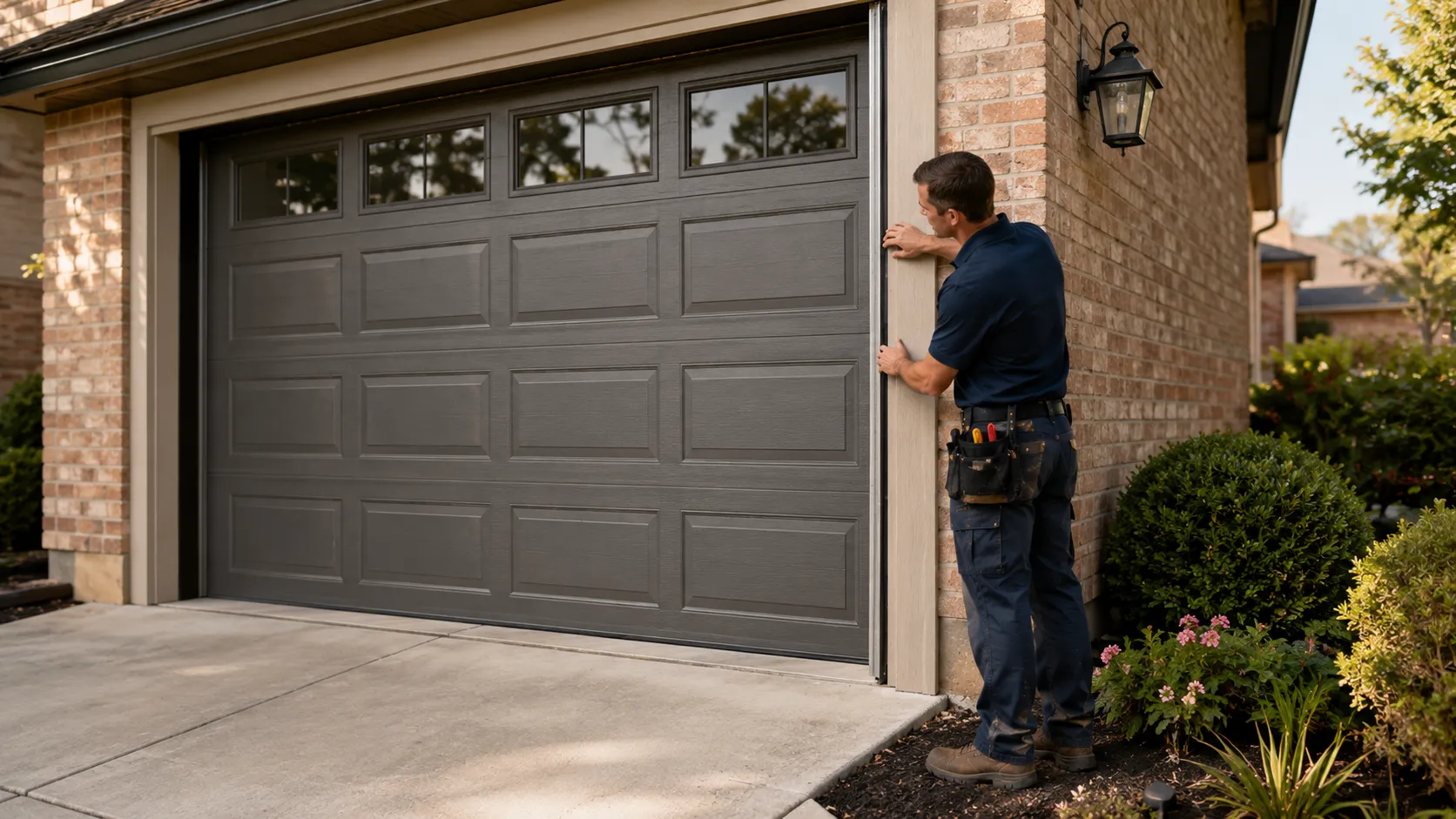
Most houses in Dacula went up around 2001, which puts the bulk of the town's garage doors at roughly two decades old and still running on whatever torsion spring the builder specified back then. That's a different problem than what we see on the older streets closer to Lawrenceville, where doors from the 1970s and 80s have usually been replaced once already. Here, the spring is often the original one - nobody's touched it since the house was framed.
A torsion spring rated for a builder-grade door doesn't last forever even if it's never been swapped. Twenty-plus years of cold-weather cycling (this area sits in a moderate-cold climate band, so the metal contracts and expands through real winters) fatigues the coil whether or not the door gets used twice a day. The failure mode is usually sudden: the spring lets go on a cable pull, the door drops fast, and the cable or bottom bracket takes the shock. If you've never replaced the spring and the house is from that build era, you're closer to that moment than you think, not further from it.
We also see cases where a homeowner has already replaced the opener but never touched the spring underneath it - a newer motor straining against a spring it was never sized for.
We run this job out of Lawrenceville, about 6 miles from Dacula, so a visit here isn't a same-block call - it's a scheduled trip on the truck route. That's fine for a spring job, which almost never needs to happen in the next ten minutes anyway; a door that's stuck shut is safer than a door with a broken spring being forced open.
When you call, tell us the door's approximate age (builder-installed around 2001 is a useful data point on its own) and whether it's a single or double door. Double doors in this area typically run two torsion springs, and if one has gone, the other is usually close behind it from the same years of wear. We'll ask what you're seeing - a loud bang, a door that won't lift past a foot, a cable that's gone slack - because that tells us which parts to load before we leave the shop.
We don't have a fixed price to quote you here without seeing the door, and we're not going to invent one. Spring jobs vary by whether it's a single spring or a pair, the door's weight, and whether the drums or cables took damage when the spring failed. What we can tell you is that Dacula's household income sits at $74,900, a touch below the wider Lawrenceville service area's $79,073 - not a reason to expect a discount, just context for why we'd rather quote you a real number over the phone than guess in writing.
What we won't do is sell you a full door replacement when a spring swap solves it. If the track's straight, the panels are sound, and it's just the spring, that's the job. Replacement only makes sense when the door itself is failing - rusted-through panels, warped track, an opener system that's fighting the door on every cycle.
The reason spring failure clusters around Dacula's build years is straightforward: builders in the early 2000s standardized on torsion springs rated close to the minimum for the door weight, and cold-climate cycling wears those springs down at a fairly predictable rate. Twenty years in, the coil has usually taken tens of thousands of open-close cycles without ever being inspected, because nobody thinks about a spring until it's gone.
This area's roughly 2,223 households mean a lot of doors installed in the same short window, which is why we see the same failure pattern come up again and again out here rather than a scattershot of different problems. It's not a defect specific to any one builder - it's just what happens to a spring nobody has replaced in two decades of moderate-cold winters.
We keep standard torsion springs sized for the door weights common to 1990s-and-2000s builder-grade construction on the truck, since that's what most of this area's stock calls for. What we don't always have on hand is a spring for an unusual door width or a heavier insulated panel door someone added later - those sometimes mean a short wait on a special-order coil rather than a same-visit fix. If your door is oversized or custom, ask when you call so we can check before we drive out.
Most of Dacula's homes were built around 2001, so a lot of springs here are pushing two decades of use without ever being replaced. Torsion springs don't have a fixed lifespan, but 20+ years of cold-weather cycling is well within the range where we expect to see failures, especially on doors that have never had the spring touched.
No. We're based in Lawrenceville and drive out to Dacula, about 6 miles away, for spring jobs. There's no local branch here, so scheduling is done as a routed visit rather than an on-demand stop.
You can, but if one spring failed from age and the other is the same age, it's usually close behind. We'll look at both and tell you honestly whether it's worth doing them together now versus paying for two separate service trips later.
Not usually. A door with a broken spring is often safer left closed and unused than forced open, since the cables and brackets can be under uneven load. It's worth a prompt call, but it doesn't need a rushed same-hour visit the way an active safety hazard would.
Call now or request a free quote - same-day service on most repairs, upfront written pricing.