Lawrenceville, GA · Garage Door Service
New garage door installs for Dacula homes built mostly after 2000 - wider openers, insulated panels, and a 6-mile call from our Lawrenceville shop.
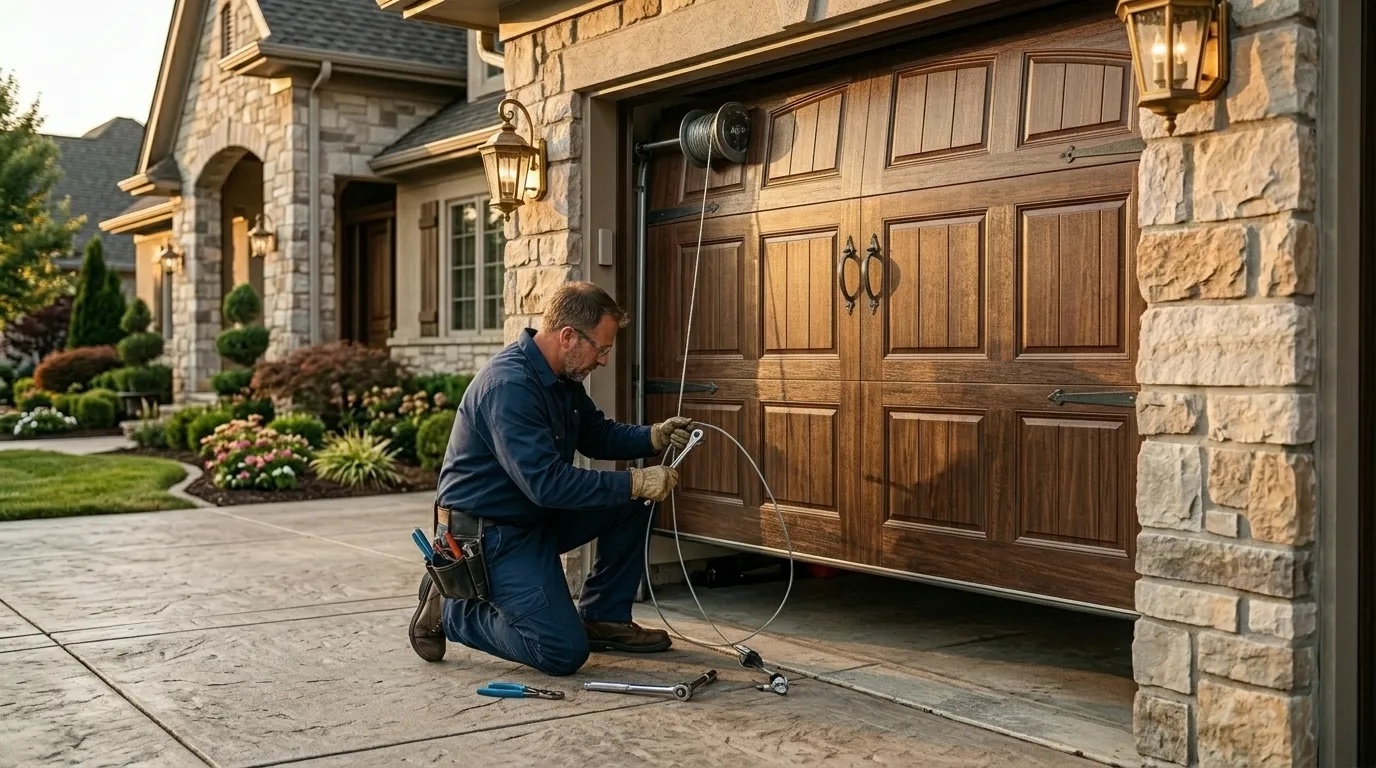
Dacula sits six miles out from our shop in Lawrenceville, close enough that a new-install visit doesn't turn into a half-day trip, but far enough that we plan the truck load before we leave - track sections, the right spring bar, the panel width the homeowner ordered, not a guess. That matters more here than it sounds, because Dacula's housing stock runs newer than the wider service area. Across our whole territory homes went up anywhere from 1951 to 2012, with a median around 1991. Dacula's median build year sits closer to 2001, a full decade newer. That means fewer of the narrow single-car bays and steel jamb returns we deal with on older stock, and more 16-foot double openings built for two-car garages with taller headroom. The complication isn't the age of the house - it's that a lot of these openers and doors are the builder-grade unit that went in at construction and was never touched again. Nobody's replaced a spring or serviced a track since the house was framed, so when we show up for a new install, we're often also pulling out hardware that's twenty-plus years past its rated cycle count, on rollers nobody's greased since the drywall went up.
We run this job from Lawrenceville, six miles from most Dacula addresses, so booking a visit means we schedule around the drive, not around a local dispatch. That's a short haul as these things go - closer than Sugar Hill or Auburn, both ten miles out - and it lets us give a real install window instead of a vague half-day guess. When you call, tell us the rough door size (single or double), whether you've got an existing opener you want kept, and if the garage has an unusual ceiling height - newer Dacula construction sometimes runs taller headroom than the older stock we see elsewhere in the territory, and that changes which track radius we bring. We don't keep a branch or a standing crew in Dacula itself; every job here is a dispatched trip from the main shop, which is why nailing down the door size and opener details on the phone saves a second visit.
We don't have a published price list for this page, and giving one without knowing your door size, insulation level, and opener choice would be a guess dressed up as a quote. What we can say is that Dacula's median household income, around $74,900, runs a bit under the roughly $79,073 median across the wider area we cover, and that shapes which jobs we quote here more often - mid-grade steel doors with a standard-lift opener, rather than the higher-end insulated wood-composite jobs we see quoted more in some of the higher-income pockets nearby. Neither is right or wrong; it's just what the numbers tell us before we've even measured the opening. A new install isn't the cheapest garage-door job we do, and if your existing door and opener are under ten years old with no cracked panels or dead springs, a repair usually beats a full replacement on cost. We'll tell you that on the phone if it's the honest answer, not just at the estimate.
A new install job in Dacula fails for a specific reason: sizing the new door and opener off the old rough opening instead of off the house it's actually going into. Because so much of Dacula's stock was built after 2000, a lot of these garages were framed for a specific double-wide builder door and a specific header height, and a generic same-size replacement can leave you with binding at the top of the track or a track radius that clears the ceiling by less than an inch. We also see failures where an installer treats a newer Dacula house like the older 1950s-90s stock common elsewhere in the territory - assuming thinner jambs, older lag-bolt patterns, or lighter framing that just isn't there. The climate band here is cold-moderate, which means the seal and insulation choice matters for winter draft control, but it's a secondary decision - get the frame fit and header clearance wrong first, and the best-insulated panel in the world won't sit right in the opening.
For new installs we bring what a 2000s-era Dacula opening actually needs: wider track sections and longer spring bars sized for the taller headroom common in newer double-car garages, plus standard torsion springs rated for the heavier insulated panels that fit a cold-moderate climate. We don't stock every historic hardware pattern from the older 1950s-90s stock in other parts of the territory, because most Dacula garages don't need it - that gear rides on the truck only when a job calls for it. One honest limit: if you want a specialty panel finish or a nonstandard width outside what we carry as stock, that's a special order, and it can add lead time to the install date. We'll tell you that up front rather than let you find out on install day.
It's about six miles from our Lawrenceville shop, one of the shorter drives in our service area. We build the day's route around trips like this, so it doesn't usually push your install date out, but we do ask for your door size and opener details ahead of time so we load the right hardware before we leave.
Not always. If your door and opener are under ten years old with no cracked panels, dead springs, or opener failures, a repair usually costs less and solves the problem. We'll say so on the phone. New installs make more sense when the door's damaged, the opener's failing repeatedly, or you're changing size or style.
Probably, but we still measure rather than assume. A lot of Dacula homes were built after 2000 with taller headroom and wider double openings than the older stock common elsewhere in our territory, so we bring track and spring hardware sized for that before confirming the exact fit on site.
Call now or request a free quote - same-day service on most repairs, upfront written pricing.