Lawrenceville, GA · Garage Door Service
Braselton homes built after 2009 carry original builder-grade steel doors. Lawrenceville Garage Door Pros installs matching upgrades here, 15 miles away.
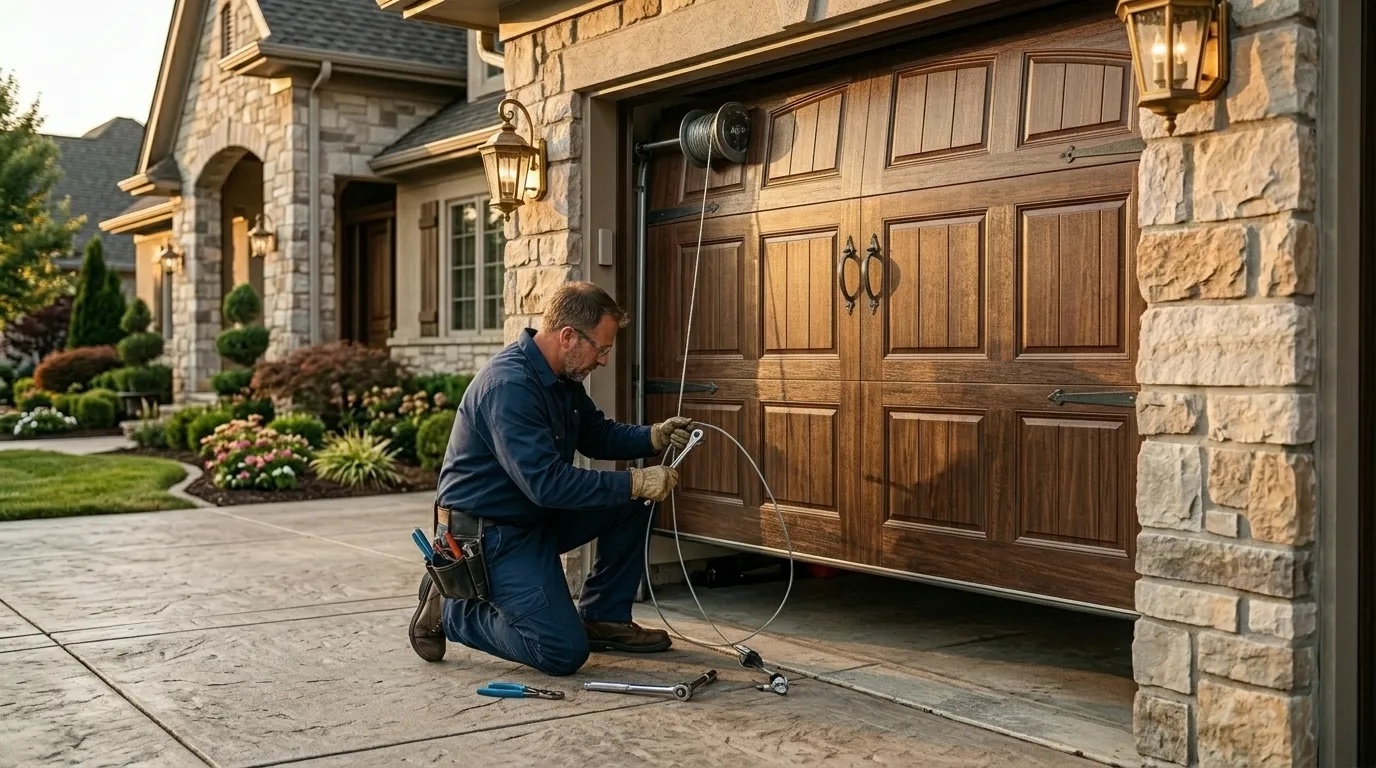
Most of Braselton went up in one long building push, and that shows up on the job site before we even open the truck. Most Braselton homes went up after 2009, which means the original door is a builder-grade steel panel, not a 1990s model - same track width, same spring class, same opener bracket as the house next to it and the one after that. That consistency actually shortens the visit. If your opening is a standard 16x7 double or a 9x7 single, we're usually working with a door and hardware set we already carry, so there's no waiting on a special order to show up before we can schedule the swap. Wider three-car layouts or a custom insulated panel take longer, since those get ordered to match once we've measured. At 15 miles from our Lawrenceville shop, a same-day round trip is normal for a straightforward swap, though we still book around your schedule rather than ours. We won't quote you an install window here without seeing the opening - a door with a bowed track or an out-of-square jamb takes longer than one that doesn't, and guessing at that on paper does you no favors.
The doors going bad in Braselton right now aren't old in the way a door in an older neighborhood is old - they're mid-teens, builder-installed, and thin. A steel panel put up during the 2009-era construction push was priced to spec, not to last: light-gauge skin, often no foam core, standard torsion springs sized for the door's shipped weight rather than for fifteen years of daily cycling. In this area's cold-moderate climate band, a non-insulated 2009 steel door tends to sweat and rust at the bottom panel well before it fails structurally - you'll see the rust line before you ever hear a spring go. With 5,380 households in Braselton, most sit in developments built in a single decade, so door sizes repeat street to street, and so does this exact failure pattern: a door that still opens and closes but has gone soft, dented, or rust-streaked along the bottom two panels. Braselton's median household income of $113,810 supports demand for insulated, carriage-style upgrades rather than bare steel replacements, and that's the swap we see requested most in this area - not a repair, a full trade-up in materials.
Because Braselton's door sizes cluster so tightly around what came standard in mid-2000s to early-2010s construction, our Lawrenceville stock lines up well with what's out there. We carry 16x7 and 9x7 steel sections in both bare and insulated builds, along with the torsion springs, drums, and cables sized for those standard weights - the same hardware that shipped with most of these houses originally, just built to hold up longer. Rollers and hinges in the common gauges are on the truck, not on order. Where we don't stock in advance is anything outside that standard range: oversized three-car single-panel doors, custom wood-look composite finishes, or openers tied to a smart-home system specific to one builder's package. Those get special-ordered once we've confirmed the opening and your opener compatibility, and that's the one honest limit here - if your door is a nonstandard width or a higher-end architectural finish, expect a lead time on the panel itself even though the labor side of the job doesn't change.
We start by measuring the opening and the track depth, not just the door - a 2009-era frame can be square or slightly off depending on how it settled, and that changes which track hardware fits. From there we confirm spring class against the new door's actual weight, since an insulated replacement almost always weighs more than the bare steel panel it's replacing, and reusing the old torsion spring on a heavier door is how you get a spring failure eighteen months later. We pull the old door and track as one unit, set the new jamb brackets, hang the new sections, and install torsion springs sized to the new weight - not the old one. Opener compatibility gets checked before we close out the job; most standard chain and belt-drive openers from this era carry over fine, but we'll tell you plainly if yours doesn't and what that adds to the job. Balance testing and a manual-release check happen before we leave, every time.
We run this job out of Lawrenceville, 15 miles from Braselton, so scheduling works around a drive time rather than a local dispatch - we'll tell you honestly if a given day doesn't work for the trip. Have your opening's width and height ready when you call, along with whether you want to match the existing bare-steel look or move to an insulated panel; both change what we bring on the truck. If you're still deciding between a repair and a full replacement, that's a conversation worth having before we schedule anything, since a mid-teens builder-grade door with a bad spring and sound panels is a different job than one with rusted-out bottom sections. See our Braselton page for what else we cover in the area, or check the Lawrenceville installation page for how we handle the job on our home turf.
Yes. Most Braselton homes were built after 2009, so the doors that came with the house are builder-grade steel from that era rather than the older stock common elsewhere in this service area. They're mid-teens now, which means springs and rollers wearing out, and insulation issues from bare steel panels, not the decades-old hardware you'd find in older neighborhoods.
No. We work out of Lawrenceville, about 15 miles away, and travel to Braselton for scheduled jobs. There's no local branch here, so booking is built around the drive rather than a same-hour dispatch.
Usually, if it's a standard chain or belt-drive opener from the same era as the house. We check compatibility as part of the visit and tell you upfront if the new door's weight or track depth means the opener needs attention too, rather than assuming it and finding out at the end of the job.
Most original Braselton doors are bare steel without a foam core, and this area's cold-moderate climate band means condensation forms on the inside skin overnight. That moisture sits at the bottom panels longest, which is why rust shows up there first even while the door mechanically still works.
Call now or request a free quote - same-day service on most repairs, upfront written pricing.