Lawrenceville, GA · Garage Door Service
Auburn, GA has 2,733 households and a median build year of 1992. See how that shapes new garage door installation, from Lawrenceville Garage Door Pros.
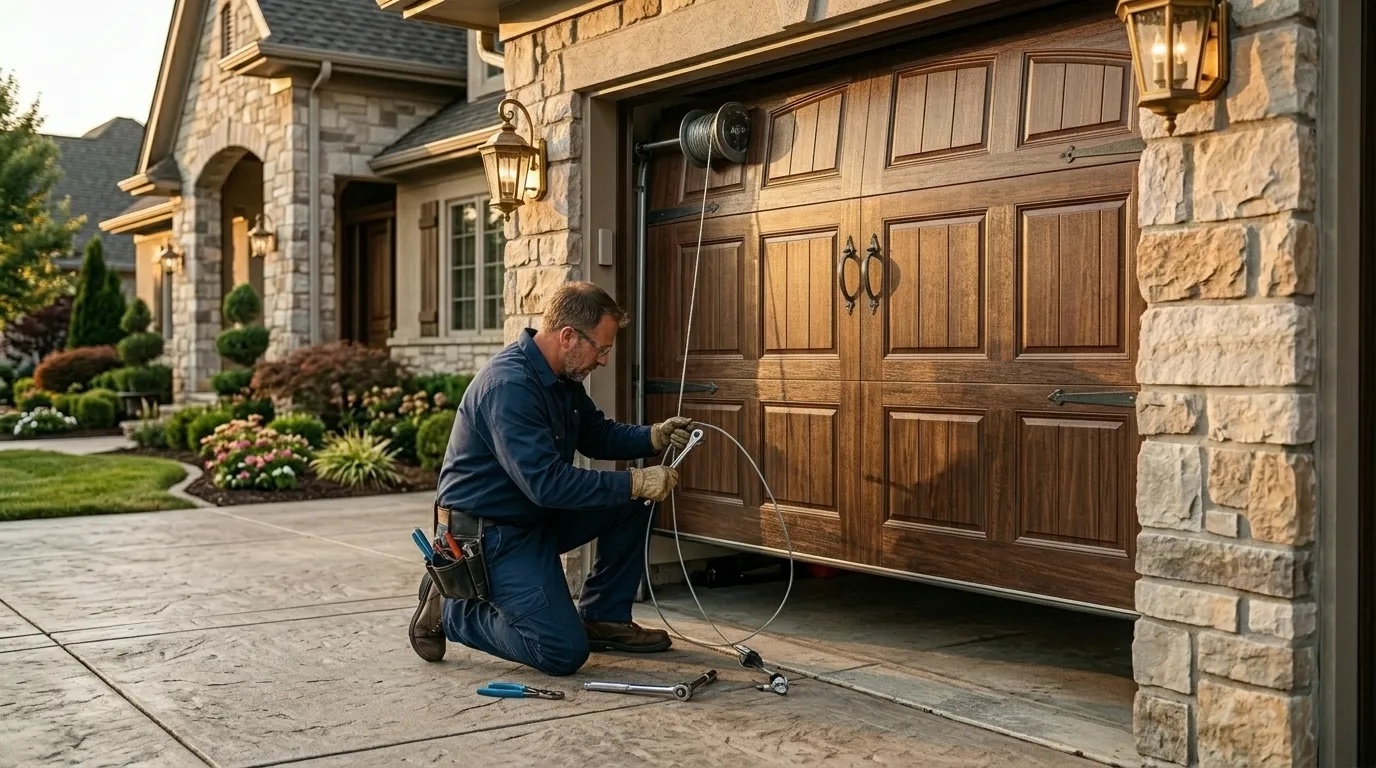
Auburn is a small town by the numbers - 2,733 households, nowhere near the density of the bigger suburbs closer to Lawrenceville. That matters for how we schedule: we're not running a truck through Auburn every day the way we might through a larger pocket of the service area, so a new door install here gets planned as its own trip, about 10 miles out from our shop in Lawrenceville. We still measure, quote, and install on the same visit whenever the door is in stock; we just build the drive time into the appointment instead of pretending it isn't there. If you want to see what else we cover in town, our Auburn garage doors page has the rundown, and our main installation page for the whole service area is here: garage door installation Lawrenceville, GA.
A lot of homeowners look at a new garage door install and figure it's a weekend project - pull the old one off, bolt a kit in, done. The kit part is fine. What trips people up is the torsion spring system, and in a town where the median house was built around 1992, that system has usually been touched once, maybe never, since the original install. Winding a spring under the wrong tension is how people get hurt, not exaggerating. If you're comfortable swapping rollers or weatherstripping, do it yourself. If the job involves taking the old spring off the shaft, that's where we'd tell you to call, not because we're protecting billable hours but because a torsion bar under load doesn't forgive a mistake.
Houses in this part of the service area built around 1992 tend to have openers and track hardware sized for the doors of that era - often narrower headroom clearance than what current doors and openers assume. When we swap in a new door, we're not just hanging a panel; we're checking whether the existing track, drum, and header clearance were built for a lighter door than what's going in now. Undersized 1990s-era track paired with a heavier insulated door is a common mismatch we catch during the walk-through, not after the door is hung. Climate matters too - this area sits in a cold-moderate band, so we look at bottom seals and weatherstripping with winter in mind, not just aesthetics.
We start with a measure and a look at what's already bolted to the frame - track type, header height, spring size, opener mounting. If the existing hardware can carry a new door safely, we reuse what still works and replace what's undersized. If it can't, we tell you before the quote, not after the install. Installation itself is a controlled sequence: old door and track out, new track set plumb, spring sized to the actual door weight (not a generic chart number), panels hung, opener reattached and travel limits reset. We test balance by hand before we ever plug the opener back in - a door that doesn't hold position halfway up on its own has the wrong spring, full stop, regardless of what the opener does.
A generic installation approach assumes a generic house, and Auburn isn't quite the same house stock as the denser parts of the service area. With 2,733 households and a median build year of 1992, this is a smaller, more uniform pocket than some of the older 1950s-60s neighborhoods elsewhere in the region - which means the failure mode here is less about ancient one-piece doors and more about track and spring sizing that was correct for a lighter, thinner door twenty-plus years ago and isn't correct for what's sold today. At a median household income of $78,317, most Auburn owners are choosing standard insulated steel doors rather than premium wood-composite lines, which is exactly the segment where an undersized spring swap gets missed most often - the door looks fine on day one and starts sagging at the corner brackets within a year.
For a standard install with no structural surprises, plan on a single visit, most of a day once the door is on site. The honest limitation: we don't keep every panel style or color on the truck, and wide or custom-width doors for larger openings sometimes carry a lead time from the supplier before we can even schedule the install date. Because Auburn is about 10 miles from our shop, we bundle the trip with a firm measure appointment first rather than guessing sizes over the phone - that one extra step usually saves a second trip later. If your opener or track turns out to need replacement too, we'll say so at the walk-through, not mid-install.
Yes. We travel out to Auburn for new installs - it's about 10 miles from our shop. We just schedule it as a dedicated trip with a measure visit first, since we don't keep a branch in town.
Sometimes. Auburn's median home was built around 1992, and track and spring hardware from that era was often sized for lighter doors than what's sold now. We check clearance and spring capacity during the walk-through before quoting a reuse.
Most standard installs finish in a day once the door is on site. Custom widths or specific panel styles can add lead time from the supplier before we can book the install date.
You can if the track and spring were sized correctly for the new door's weight. If they weren't - common with older 1990s hardware paired with a heavier insulated door - the door won't balance right, so we check that first.
Call now or request a free quote - same-day service on most repairs, upfront written pricing.