Lawrenceville, GA · Garage Door Service
Garage door repair and install for Auburn, GA, a 10-mile drive from our Lawrenceville shop. Built around this town's early-90s housing stock and its hardware.
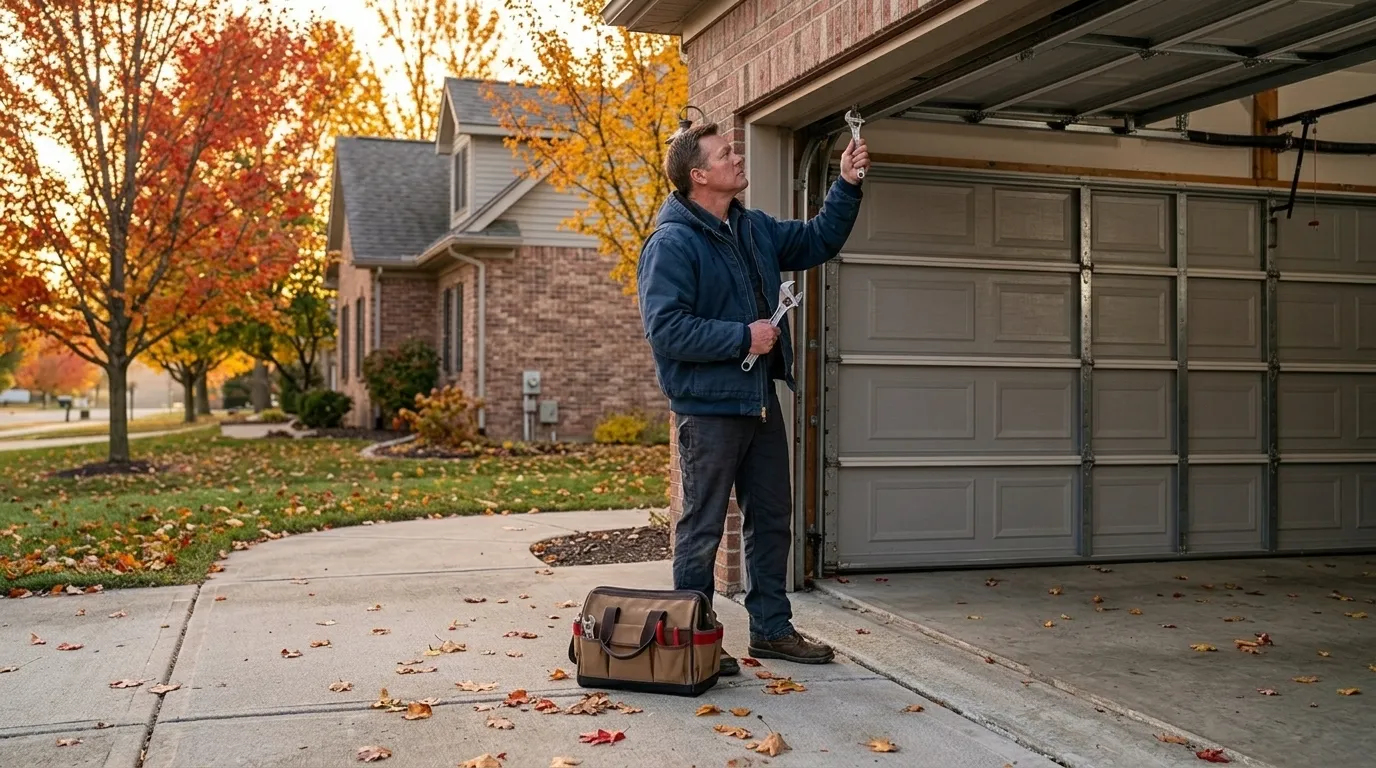
Auburn sits about 10 miles from our shop in Lawrenceville, which is close enough that a call here doesn't turn into a half-day trip, but it's far enough that we plan the route before we plan the job. When you call, we ask what year your house went up and what the door looks like from the driveway, because that tells us which spring size and which track hardware to load before the truck leaves. That one question saves a second trip more often than anything else we do.
We don't keep a branch in Auburn, and we're not going to pretend otherwise - every job here starts from Lawrenceville. What that means for you is we batch service calls by area when we can, so if you're flexible on the day, you might get a faster slot than if you need a specific hour. If it's a spring that's already snapped and the door won't move, tell us that up front; that's not a schedule-around job.
A fair number of Auburn houses were built right around 1992, which puts a lot of doors and openers in that late-80s-to-90s window - old enough that the springs are original or one replacement in, young enough that parts aren't impossible to find. That combination tempts people into DIY more than it should. A torsion spring under load will put a mechanic in the ER faster than almost anything else in a garage, and the winding bars for a 1990s-era door aren't the same as what you'd rent for a newer one.
What's reasonable to do yourself: tightening loose hinge bolts, lubricating rollers, clearing the track of debris, replacing weatherstripping. What isn't: springs, cables, anything at the top bracket where the door's full weight hangs. If you're not sure which category a job falls into, that uncertainty is itself the answer - call.
The trouble with a house built in 1992 is that it's old enough for the original hardware to be tired, but not old enough that the owner assumes it needs replacing. Torsion springs are rated in cycles, not years, and a spring installed when the house was new has usually put in 30+ years of daily openings by now. That's past the end of most spring's rated life regardless of climate.
On top of the age, this is a cold-moderate climate zone, not the Deep South heat some nearby areas deal with - swings between cold mornings and warmer afternoons make steel contract and expand, which is hard on cable ends and hinge pins over decades. It's not dramatic weather, but it's steady wear, and steady wear is what actually breaks springs, not one bad day.
For a spring failure on a door from this era, we match the wire size and wind to what's already on the shaft rather than guessing off a generic chart - a mismatch is the single most common reason a replacement spring fails again within a year. We carry standard torsion spring stock sized for the housing that's typical across this area, since so much of it clusters in the same late-80s-to-90s build window.
Where we can, we replace only the failed part - spring, cable, or roller - instead of pushing a full opener swap. Where we can't, usually because the drum or shaft itself is worn past spec, we say so plainly and price the larger job before we start, not after.
This isn't a page about garage doors breaking down in general - it's about why the specific mix of age and distance matters here. A door installed in 1992 is well past the point where a torsion spring should still be original, and a 10-mile drive from our shop means we're not going to happen to be nearby when it lets go. Both of those are true regardless of what the weather's doing that week.
The fix isn't urgency marketing, it's matching the part to the house. A spring rated for a lighter door installed on a heavier insulated panel - a swap that happens more often than owners realize when a door gets replaced but the spring doesn't - will fail early no matter how careful the rest of the install was.
Most spring jobs on a standard double door run under two hours once we're on site, parts and labor included - that part doesn't change much by town. What does change with the 10-mile drive is the window around the visit: we build in travel time on both ends when we schedule, so the appointment slot we give you accounts for the trip from Lawrenceville, not just the repair itself.
If the job turns out to need a part we don't carry on the truck - an oversized cable drum or an odd-width track from a nonstandard install - we'll say so at the door rather than mid-repair, and that second trip is the honest cost of getting it right instead of forcing a part that doesn't fit.
About 10 miles from our Lawrenceville location. We don't keep a branch or truck stationed in Auburn - every job starts from Lawrenceville, and we build the drive into how we schedule the visit.
A lot of Auburn houses went up around 1992, which puts many original torsion springs at 30-plus years and well past their rated cycle life. Age alone doesn't mean failure is imminent, but it's the first thing worth checking if the door's gotten noisy or heavy to lift by hand.
We'd rather you didn't. A wound torsion spring holds enough stored force to cause serious injury, and the winding bars and cone sizes for a 1990s-era door aren't universal. Lubrication, hinge bolts, and weatherstripping are fine DIY jobs; anything at the spring or cable is not.
We stock standard torsion spring sizes that match the hardware common to houses built in this window. Nonstandard tracks or oversized drums sometimes need a second trip, and we'll tell you at the door if that's the case rather than mid-repair.
Call now or request a free quote - same-day service on most repairs, upfront written pricing.