Lawrenceville, GA · Garage Door Service
Auburn homes went up mostly around 1992, and that means specific spring sizes and opener types. We drive out from Lawrenceville, 10 miles away, to fix them.
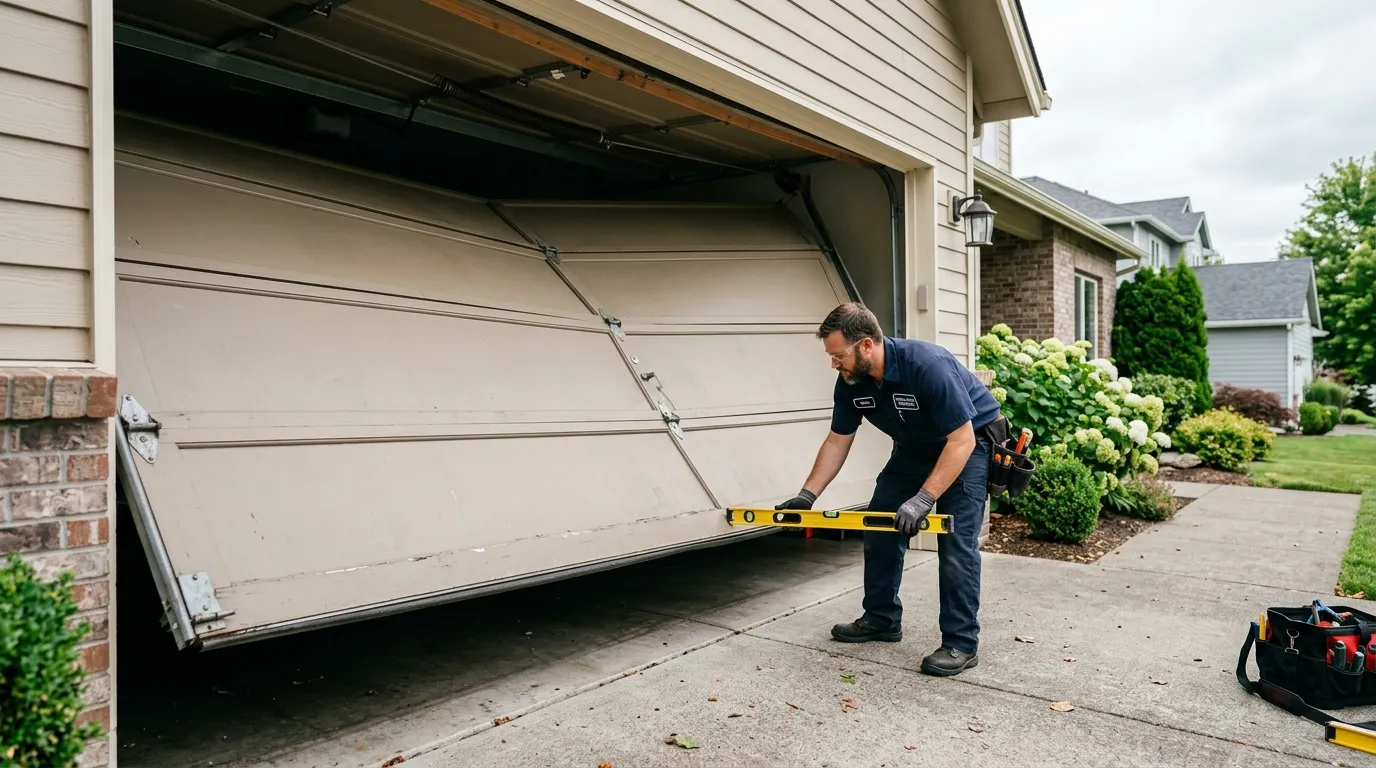
We don't keep a branch in Auburn. We run the call from Lawrenceville, about 10 miles up the road, and that's the honest limitation up front: if you need someone standing in your driveway in twenty minutes, we're not that. What we are is a crew that knows what's behind an Auburn garage door before we open the panel, because most of this town's houses were built around 1992, a tighter band than the 1951-2012 spread we see across the wider service area. Across that whole area we're looking at roughly 88,407 households and about 37,793 owner-occupied houses, but Auburn itself is smaller and more uniform - close to 2,733 households, most raised in the same building cycle. That consistency actually helps us. When you call, we ask the age of the house and the door before we ask anything else, because in Auburn that one answer usually tells us the spring wire size and whether the opener is chain-drive or screw-drive before the truck leaves the shop.
Book online or call ahead. We'll ask a few questions about the door's age and symptoms so we're not guessing when we get there.
A door built in the early '90s almost always runs on torsion springs mounted on a steel shaft above the opening, not the side-mounted extension springs of an older house. That's a different repair, and it's not a safer one to attempt yourself - torsion springs hold more stored tension per inch of wire, and winding one down with the wrong bar or no bar at all is how people end up in the ER, not how they end up saving money.
What you can safely check yourself: the photo-eye sensors near the floor, whether the track is visibly bent, and whether the noise is coming from the rollers or the opener motor. None of that requires opening the spring system. If the door won't move, or moves and then drops, stop there and call - that's a spring or cable job, not a Saturday project.
Doors installed through the '90s in this part of Georgia typically came with steel torsion springs rated for a specific door weight, and after 25-30 years those springs are past the winding cycles they were built for even if they haven't snapped yet. The complication we run into in Auburn specifically is that a lot of these original setups used spring sizes that aren't standard stock anymore - the hardware supply houses have moved on to a narrower range of sizes, so a like-for-like replacement sometimes isn't sitting on the truck.
The other complication is the opener side. A 1992-era opener, if it's still the original, doesn't have rolling-code security or a battery backup, and homeowners are often surprised the two problems - a dying spring and an aging opener - show up in the same visit. We'll tell you straight if it's worth doing both at once.
We measure the door weight and the existing spring's wire diameter and wind count rather than assume the sticker on the shaft still matches what's installed - after 30 years of adjustments and prior repairs, it often doesn't. If the torsion spring has failed, we replace it with a correctly rated match, check the cables and drums while the tension is off, and lubricate the rollers and hinges since we're already in there.
If the opener is the original chain-drive unit from that era, we test the force settings and safety reversal before touching anything else - a lot of "the door won't close" calls turn out to be a misaligned photo eye, not a spring problem at all, and we're not going to sell you a spring job to fix a sensor.
Georgia sits in a cold-moderate climate band, meaning winters aren't brutal but they're enough to stiffen old grease and shrink steel tracks a few thousandths of an inch - not much, but enough to bind a roller that was already worn from 30 years of an early-'90s door cycling twice a day. Combine that with springs original to a 1992 build and you get the pattern we see across Auburn: fine all summer, then a snap or a stall on the first cold morning.
At a median household income of $78,317 in Auburn, most homeowners we talk to are weighing a spring replacement against a full opener swap, not stalling on whether to fix it at all. That's a useful thing to know going in - we'd rather quote both options honestly than upsell one you didn't ask about.
A straight torsion spring replacement on a door this age usually runs under two hours once we're on site, cables and drums included if they need it. Opener swaps take longer, closer to half a day if we're also rewiring a wall control or adding a keypad.
The one thing we can't promise from Lawrenceville is a same-hour arrival - we're honest about that distance. What we can promise is that we bring the spring sizes and opener parts that actually match what's common on Auburn's housing stock, so we're not making a second trip because the first one didn't have the right part on the truck.
We run this area out of our Lawrenceville shop, about 10 miles away. It keeps our stock and crew in one place instead of split across small offices. We plan the drive into the job, and we bring parts sized for the spring and opener types common on houses built here in the early '90s.
Depends on the door, not just the year. A steel door from 1992 with a bent track or worn rollers is usually worth repairing. If the panels are rusted through or the door's been patched more than once already, replacement often costs less over time than another repair.
Cold-tightened grease and slightly shrunk steel put more load on a spring that's already near the end of its wind cycles. It was likely close to failing anyway - winter just tends to be when it finally lets go.
Call now or request a free quote - same-day service on most repairs, upfront written pricing.